Cape Town is the reliable strong-wind destination during the European winter, November to March. It is also cold, powerful and not a beginner’s spot. Riders come for downwinder wave sessions and big air; anyone still learning should head an hour up the coast to Langebaan’s flat lagoon instead.
We should confess a bias up front: we have an office in Cape Town as well as the UK, and a lot of our team travel here regularly. We love it. What follows is still the honest version, including the parts that put people off.
Why Cape Town, and when
Cape Town is known among kitesurfers as the place for strong wind in the European winter months, November to March. The south-easter (locally the Cape Doctor) is the engine, and it is at its most relentless from December through February. For most visitors the draw is either the epic downwinder wave sessions or boosting serious air.
Where “Cape Town” actually means
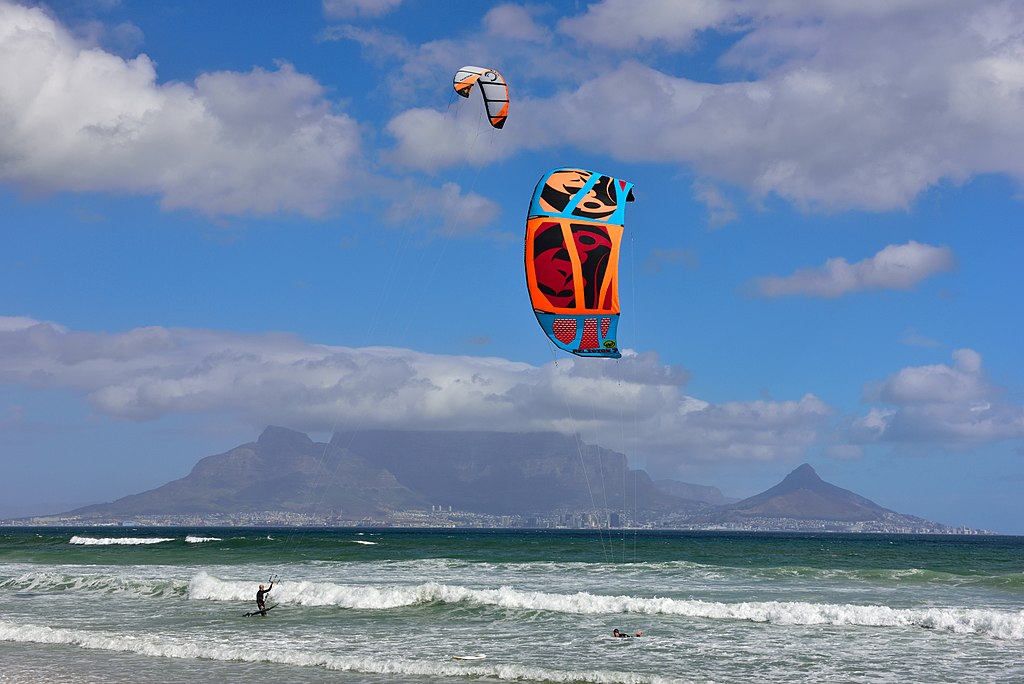
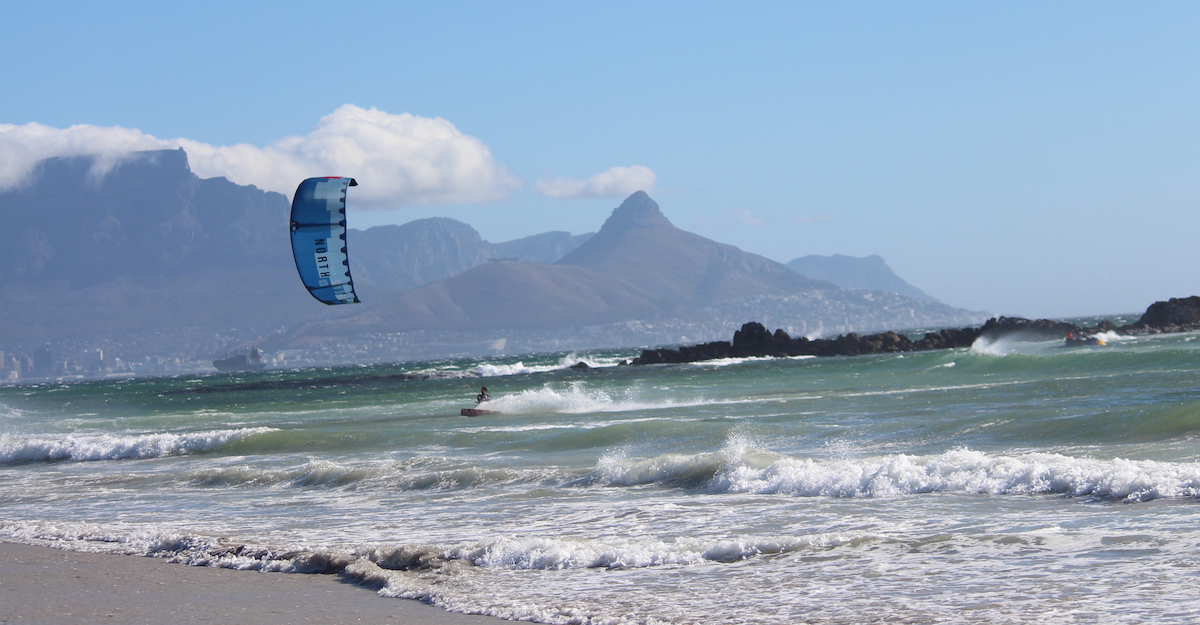
Kitesurfing in Cape Town refers to a 10 km stretch of beach starting at Sunset Beach, running through Dolphin Beach and Bloubergstrand, and finishing at Big Bay (Eden on the Bay). For a longer wave session you can keep going another 20 km up the coast to spots like Haakgat and Melkbosstrand — yes, you can kitesurf next to a nuclear power station.
The full breakdown of each beach, and the hotels within walking distance, is on our Cape Town kitesurfing page.
The two questions we always get
“Will I get eaten by a shark?”
South Africa has historically had a "sharky" reputation, and it is worth answering properly rather than brushing off.
The main kite beaches are on the Atlantic side of the Cape Peninsula. Great whites were long associated with the Indian Ocean side — the seal-rich water around Gansbaai and Dyer Island, on the opposite side of the peninsula. Numbers there fell to a few hundred by 2016, down from thousands previously, and most of those remaining have since been driven off by orcas patrolling the area. On the Atlantic kite beaches there is little to feed a large predator in the first place.
As far as we know there has never been a recorded incident involving a kitesurfer, surfer or open-water swimmer on this stretch. It is the ocean, so nobody offers guarantees — but the risk is not what the reputation suggests.
“Am I good enough?”
This is the more important question, and the answer is more often no than people expect. Cape Town is a challenging place for beginners and even for improvers. Strong wind, cold water, shore break and a lot of very good riders on the water.
If you are not comfortable in big conditions, go to Langebaan Lagoon instead — an hour up the coast, a flat-water lagoon, far easier conditions, and one of the world’s best spots for kite foiling and wing foiling. Plenty of people split the trip: Langebaan to find their feet, Cape Town once they have.
What to bring
| Cape Town | Langebaan (1 h north) | |
|---|---|---|
| Water | Ocean, swell, shore break | Flat, shallow lagoon |
| Wind | Strong — often 25–35 kn | Strong but cleaner |
| Kite sizes | 7–9m typical, 5m on the big days | 7–10m |
| Wetsuit | 3/2 or 4/3 full suit, boots on cold days | Full suit |
| Water temp | ~12–18°C (Benguela current) | Slightly warmer |
| Suits | Confident intermediates and up | Beginners, improvers, foilers |
Who it isn’t for
If this is your first kite holiday, pick somewhere warm and shallow — see learn to kitesurf holidays or the lagoons of Mauritius. If you are travelling with non-kiting family, Cape Town the city is superb but the kite beaches are not resort beaches; you will be driving. And if you want warm water, this is the wrong trip — the Benguela current stays cold whatever the month.
For the wider country, including the warm-water alternative up in Mozambique, see South Africa kitesurfing holidays.
Planning a Cape Town winter escape?
We have people on the ground here. Tell us your level and your dates and we will be straight with you about whether Cape Town, Langebaan or a split of the two is the right trip — then quote it properly with flights, transfers and accommodation on the right beach.
Free, with no obligation and no booking fee. We’re a UK tour operator, trading since 2001 —
every resort we sell has been ridden by one of our own team. Mon–Fri, 09:00–18:00 UK ·
5★ on Google from 190+ reviews · ATOL protected (T7314) and Travel Trust Association members.
Frequently asked questions
When is the kitesurf season in Cape Town?
November to March, the southern-hemisphere summer, which is the European winter. The south-easter (the "Cape Doctor") blows hardest from December to February. It is one of the few places that is reliable while northern Europe is unrideable.
Are there sharks where you kitesurf in Cape Town?
The main kite beaches are on the Atlantic side, which has little of the seal life that attracts large predators. Great white numbers off the Cape fell to a few hundred by 2016 and most of those have since been displaced by orcas. We know of no record of a kitesurfer, surfer or open-water swimmer having a shark incident on this stretch.
Is Cape Town suitable for beginners?
Honestly, no. The wind is strong, the water is cold and there is shore break. Beginners and improvers should head an hour up the coast to Langebaan, a flat, shallow lagoon with far more forgiving conditions, and treat Cape Town as somewhere to progress to.
How cold is the water in Cape Town?
Cold. The Atlantic side is fed by the Benguela current and sits roughly 12–18°C even in summer. A full wetsuit is not optional — most riders use 3/2mm or 4/3mm, and many add boots on the colder days.
What size kite do you need in Cape Town?
Smaller than you think. On a typical summer south-easter day most riders are on 7–9m, and there are days when 5m is the right call. If you normally ride a 12m at home, plan your quiver accordingly.