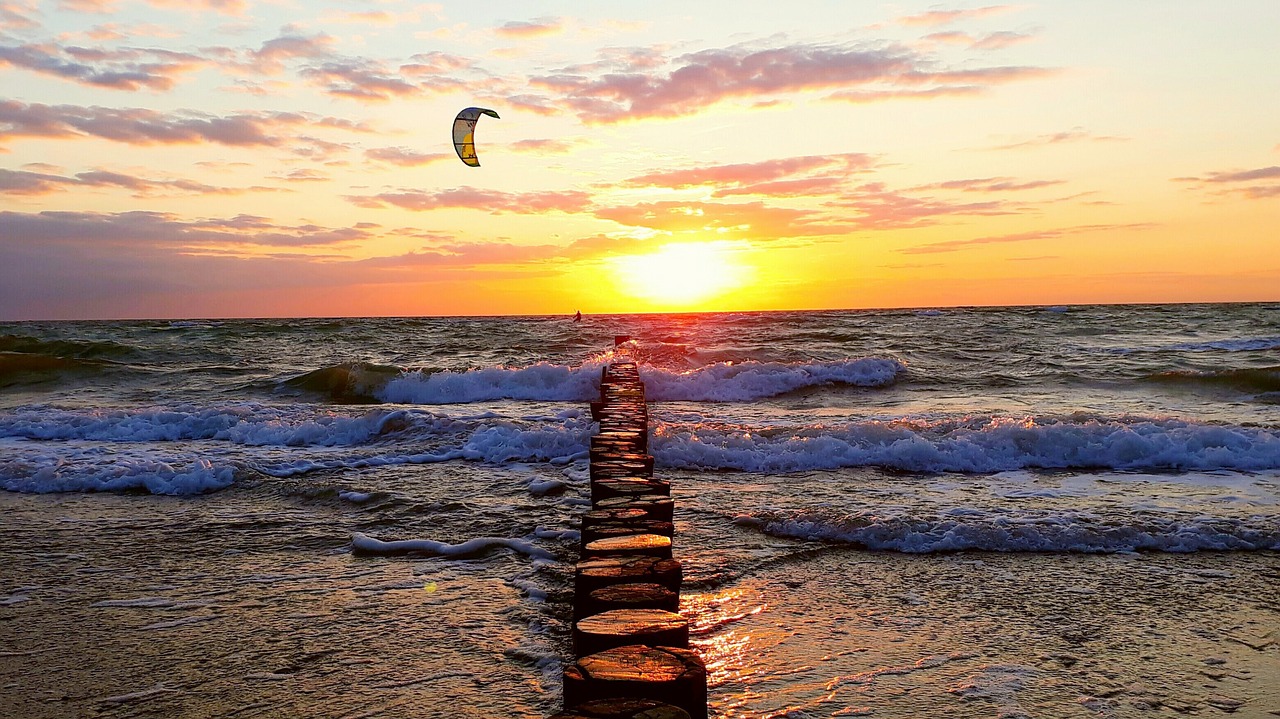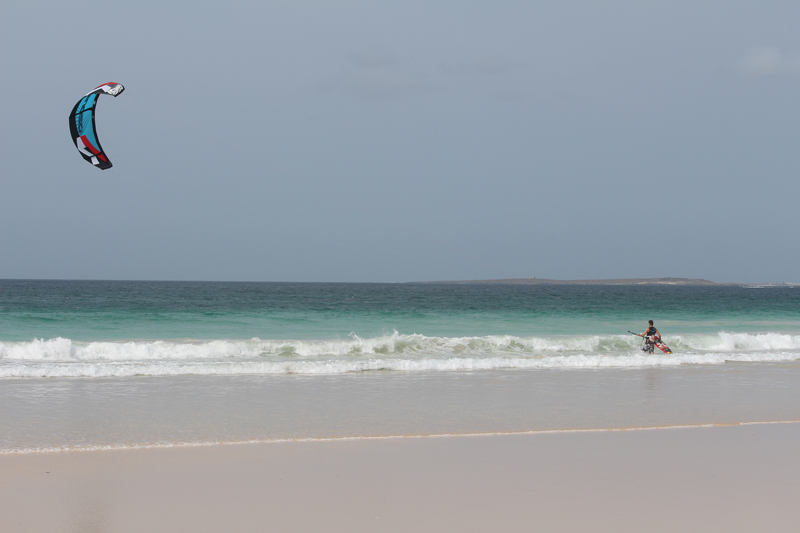
Cape Verde’s kite season runs November to June — the opposite way round to Europe’s. The north-east trade wind blows almost daily through the European winter, the water sits in the low-to-mid twenties, and it is roughly six hours direct from the UK. Sal is the busy, well-served island with a wave spot attached; Boa Vista is bigger, emptier and more of an expedition.
Why it works in January
The islands sit about 570 km off the coast of Senegal, right in the path of the north-east trades. From late autumn through to early summer that wind is close to a daily event rather than a forecast, which is what separates Cape Verde from every Mediterranean option.
The other half of the appeal is timing. It is windy precisely when Tarifa is stormy, Greece is shut and Sardinia is cold. If you can only take a winter holiday, this and the Red Sea are the two short-haul answers — and Cape Verde is the windier of the two.
Sal or Boa Vista
| Sal | Boa Vista | |
|---|---|---|
| Main spots | Kite Beach and Santa Maria bay; Ponta Preta for waves | Long open beaches, notably around Praia de Chaves |
| Water | Choppy to swelly at Kite Beach, flatter inside Santa Maria bay | Open ocean, more swell, fewer sheltered corners |
| Scene | Established. Several centres, shops, bars, restaurants in Santa Maria | Quieter and more resort-bound |
| Best for | Most riders, first visits, anyone wanting a wave option | Confident riders who want space and do not need a town |
| Flights | Direct from the UK to Sal (SID) | Direct from the UK to Boa Vista (BVC) |
For a first trip we point most people at Sal. It has the infrastructure, the choice of centres, and enough variety of conditions within a short drive that a change in wind direction does not end your day.
Boa Vista is the one to pick when you have been before, or when what you want is a big empty beach and no decisions.
Kite Beach, and being honest about it
Kite Beach on Sal has a reputation, and it is deserved in both directions. The wind is superb and often side-shore. The water is not flat: there is usually chop, frequently swell, and on a big day a proper shorebreak to get out through.
That makes it a brilliant place to ride if you are comfortable in moving water, and an intimidating one if you are not. It is why we are careful about who we send here to learn — if this would be your first week on a kite, start with the learn-to-kitesurf collection instead. Santa Maria bay, a short distance away, is the more forgiving option and where most schools do their teaching.
Ponta Preta, further round, is a genuine wave spot and one of the better ones in the Atlantic. It is for experienced riders only, and it is not somewhere to have your first go at riding a wave.
When to go
| Period | Wind | Water | Verdict |
|---|---|---|---|
| November – December | Season building, already reliable | ~25–26°C | Warm water, good wind, and it feels a long way from a British winter. |
| January – March | Peak. Strongest and most consistent | ~22–24°C | The classic window. Bring a shorty — the water cools and the wind has bite. |
| April – June | Still good, easing towards the end | ~23–25°C | Warming up, quieter, and often better value. |
| July – October | Light and unreliable | Warmest | Not a kiting season. This is when the islands are humid and still. |
What people get wrong
Expecting the tropics. Cape Verde is at 16° north and the sun is fierce, but the trade wind is cooling and the sea in January sits around 22–23°C. Most riders want a shorty; a fair number use a 3/2mm in peak season. Boardshorts-only is a January mistake.
Expecting a lagoon. There isn’t one. These are Atlantic islands with Atlantic water. If flat, standing-depth conditions are what you are after, Dakhla is the better winter answer at a similar flight time.
Expecting lush. Sal and Boa Vista are arid and volcanic. That has its own stark appeal, but nobody should book expecting green.
Who this isn’t for
Absolute beginners, unless you go specifically to Santa Maria bay with a school and accept that some days will be too much. Nervous water users. And anyone whose partner wants a conventional beach-and-sightseeing holiday — there is less to do off the water here than at most destinations we sell.
Who it is very much for: an intermediate or better rider who wants near-guaranteed wind between November and June, a direct flight, no jet lag worth mentioning, and warm water. On those criteria, very little else comes close.
Frequently asked questions
When is the kitesurfing season in Cape Verde?
November to June, with January to March the peak. The north-east trade wind blows almost daily through the European winter, which is exactly when the Mediterranean spots are closed.
Is Sal or Boa Vista better for kitesurfing?
Sal for a first visit: more centres, more choice of conditions within a short drive, and a proper town at Santa Maria. Boa Vista is bigger, quieter and more resort-bound, which suits confident riders who want space rather than a scene.
Do you need a wetsuit in Cape Verde?
Most riders want a shorty, and plenty use a 3/2mm in the January to March peak when the water sits around 22 to 23 degrees. The trade wind is cooling, so the sea feels cooler than the latitude suggests.
Is Kite Beach on Sal suitable for beginners?
Not . Kite Beach usually has chop, often swell, and on a big day a shorebreak to get out through. Santa Maria bay nearby is the more forgiving option and is where most schools teach.
How long is the flight to Cape Verde from the UK?
Around six hours direct to Sal (SID) or Boa Vista (BVC), with only a one-hour time difference from the UK, so there is effectively no jet lag.
Escaping the European winter?
Cape Verde and the Red Sea are the two short-haul answers, and they suit different riders. Tell us your level and your weeks and we will lay out the honest trade-offs.
Free, with no obligation and no booking fee. We’re a UK tour operator, trading since 2001 —
every resort we sell has been ridden by one of our own team. Mon–Fri, 09:00–18:00 UK ·
5★ on Google from 190+ reviews · ATOL protected (T7314) and Travel Trust Association members.