Kitesurfing Fuerteventura: Sotavento, Flag Beach and When to Go
Fuerteventura has two very different kite coasts. Sotavento in the south is a tidal lagoon that fills flat and drains to a sandy plain, and it is one of the best freestyle spots in Europe when the timing is right. Flag Beach in the north is choppier, more sheltered and much easier to learn at. The trade wind blows hardest from May to September and the water needs a wetsuit all year.
Why the Canaries are windy
The islands sit in the north-east trade wind belt off the coast of Africa, and Fuerteventura is the flattest and most exposed of them — there is very little high ground to disrupt the flow. In summer, when the thermal low over the Sahara strengthens the gradient, the trades accelerate down the coast.
The practical upshot is a wind season that overlaps the whole European summer, at four hours’ flight from the UK, with no time difference. That combination is why Spain’s Canary Islands remain one of the most-booked kite destinations in the world.
Sotavento: the lagoon that comes and goes
Southern Fuerteventura, along the Costa Calma stretch to Risco del Paso, is where the serious riding happens.
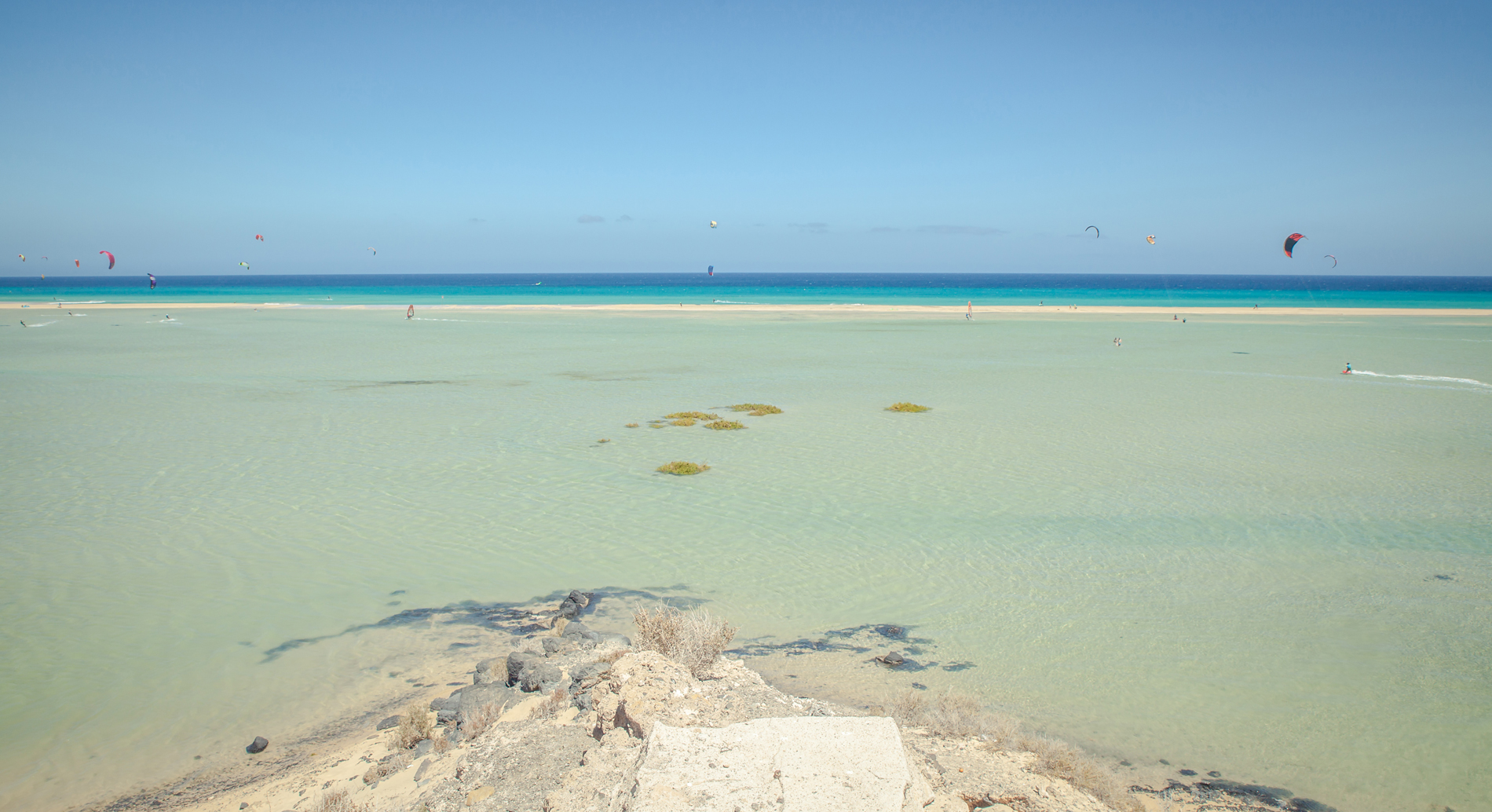
The lagoon at Sotavento is tidal, and understanding that is the whole trick to riding here. On a high spring tide it fills to a wide, shallow, mirror-flat basin between the beach and a sandbar — one of the best flat-water spots on the continent. As the tide drops, it drains, and what was a lagoon becomes wet sand and shallow channels.
So your riding plan follows the tide table rather than the clock. Locals check both. Outside the lagoon there is the open ocean side, which is choppy, powerful and where the speed and freeride crowd tend to be.
This is also the windiest part of the island. In July and August, small kites are the norm and a 7m gets a lot of use.
Flag Beach: the friendly one
Northern Fuerteventura, at Corralejo, is a different day out. Flag Beach sits in the lee of the dunes with Lobos island offshore, and the wind arrives side-onshore over water that is shallow and sandy but rarely flat.
It is less powerful than the south and the chop is constant, but for a first week on a kite that is a fair trade. The bay is forgiving, the schools are well established, and Corralejo is a proper town with restaurants, bars and a ferry to Lanzarote — which matters a great deal if you are travelling with someone who is not kiting.
North or south
| Sotavento (south) | Flag Beach (north) | |
|---|---|---|
| Wind | Stronger. Small-kite weather in summer | Moderate to strong |
| Water | Flat lagoon on the right tide; open ocean chop otherwise | Consistently choppy, shallow, sandy |
| Learning | Possible but the wind is a lot | Much better |
| Off the water | Quiet. Resort hotels, big empty beaches | Corralejo — a town with things in it |
| Best for | Freestyle, speed, confident riders | Beginners, improvers, mixed groups |
When to go
| Period | Trade wind | Water | Verdict |
|---|---|---|---|
| May – September | Strongest and most consistent | ~20–23°C | Peak. July and August are the windiest and the busiest. |
| March – April, October | Good, less certain | ~19–21°C | Shoulder season. Quieter, cheaper, still plenty of rideable days. |
| November – February | Variable, some excellent days | ~18–19°C | The winter-sun option. Wind is not guaranteed; sunshine largely is. |
The wetsuit, again
The Canaries sit at the same latitude as the Sahara and people reasonably expect tropical water. They do not get it. The Canary Current runs cold down this coast and keeps the sea between roughly 18 and 23°C all year.
A shorty is the summer minimum, a 3/2mm full suit is what most riders wear for a full session, and in winter a 4/3mm is sensible. Add the wind chill of a 25-knot afternoon and the difference between the right suit and the wrong one is a two-hour session versus a forty-minute one.
Who this isn’t for
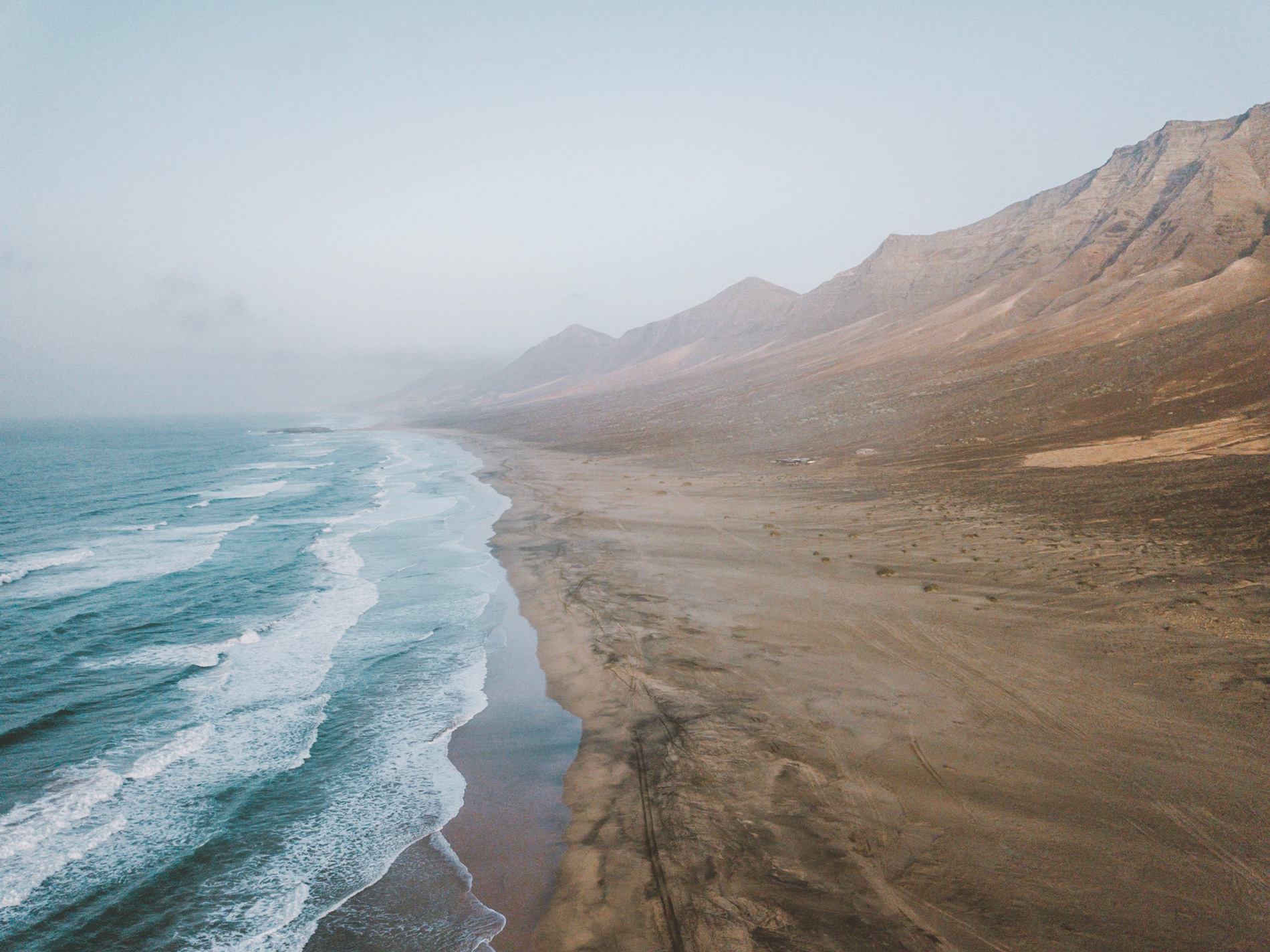
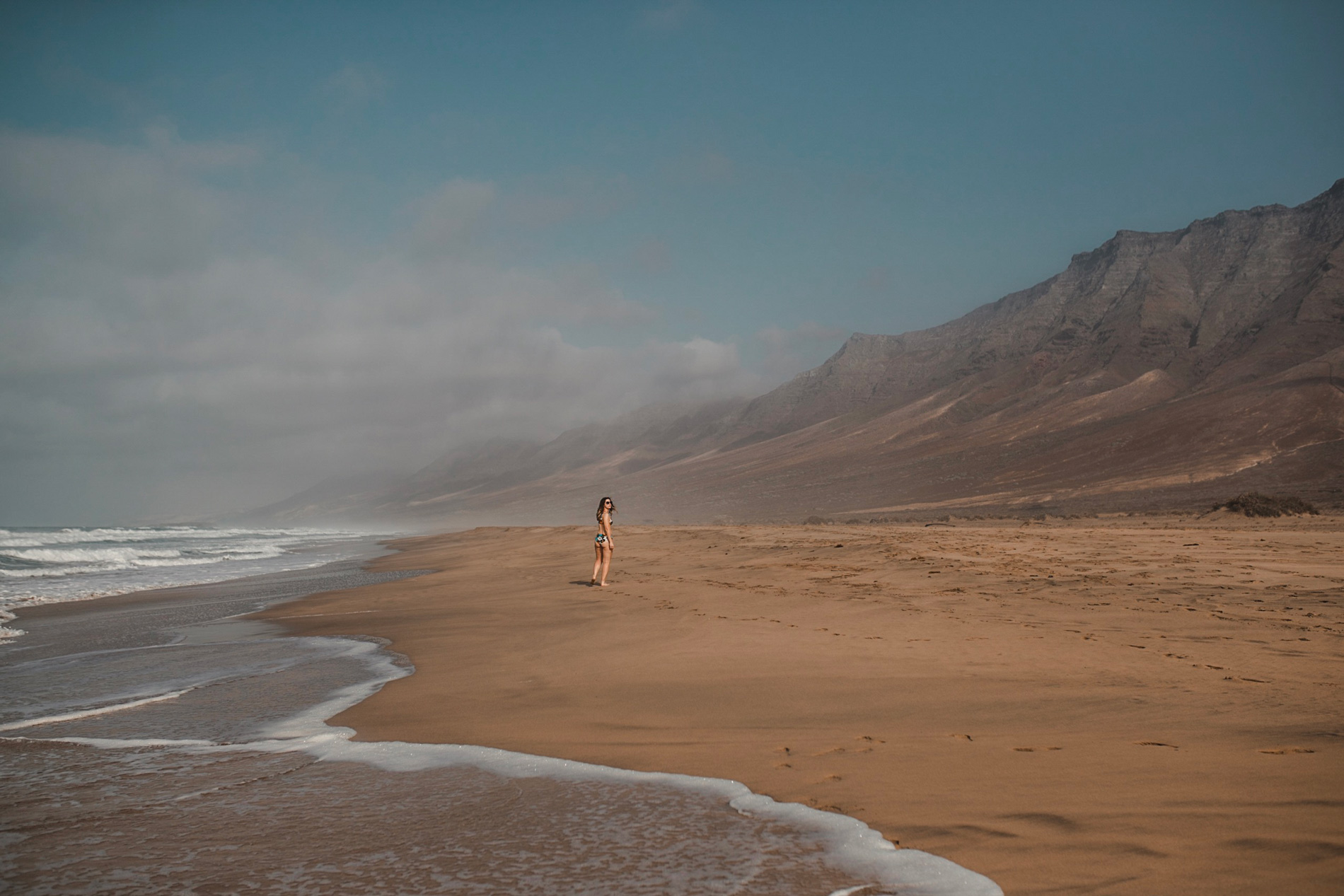
If you want warm, still, tropical water and palm trees, Fuerteventura will disappoint. It is volcanic, arid and windswept — handsome in a stark way, but nobody would call it lush. Mauritius or the Maldives are the destinations for that.
If you are a nervous beginner, go north, not south, and be honest with the school about your level. Sotavento in August is a lot of wind for a first lesson.
And if you want guaranteed flat water on demand, remember that the lagoon is tidal. Some weeks the tides line up well with the wind and some weeks they do not.
What Fuerteventura does better than almost anywhere: four hours from the UK, no jet lag, wind through the entire European summer, two coasts to choose from, and enough infrastructure that a mixed-ability group can all get what they want. For a family where one person is chasing freestyle and another is on their first lesson, it is one of the few places that works for both — see the family kitesurf collection for how we usually put that together.
Frequently asked questions
Is Sotavento or Flag Beach better?
Sotavento in the south is stronger and gives you a flat lagoon on the right tide, which suits freestyle and confident riders. Flag Beach in the north at Corralejo is choppier but far more forgiving, and Corralejo is a proper town, which matters if you are not kiting all day.
Why is the lagoon at Sotavento sometimes not there?
It is tidal. On a high spring tide it fills into a wide, shallow, flat basin between the beach and the sandbar; as the tide drops it drains to wet sand and channels. Riding plans here follow the tide table, not the clock.
When is the best time to kitesurf in Fuerteventura?
May to September for the strongest and most consistent trade wind, with July and August the windiest and busiest. March, April and October are good shoulder months, and winter is a sunshine holiday with wind that is not guaranteed.
Do you need a wetsuit in the Canary Islands?
Yes. The Canary Current keeps the sea between roughly 18 and 23 degrees all year. A shorty is the summer minimum, a 3/2mm suits most riders, and a 4/3mm is sensible in winter.
Is Fuerteventura good for beginners?
Flag Beach in the north is, with shallow sandy water and well-established schools. Sotavento in high summer is a lot of wind for a first lesson and is better left until you can ride upwind.
North or south Fuerteventura?
If your group has mixed abilities, the answer is often both, and the island is small enough to do that. Tell us who is coming and we will build it around the tides.
Free, with no obligation and no booking fee. We’re a UK tour operator, trading since 2001 —
every resort we sell has been ridden by one of our own team. Mon–Fri, 09:00–18:00 UK ·
5★ on Google from 190+ reviews · ATOL protected (T7314) and Travel Trust Association members.