Kitesurfing, Explained: What It Is, What It Costs and How Long It Takes to Learn
Written by the Planet Kitesurf team — we’ve been arranging kitesurf holidays since 2001, which is almost as long as the sport has existed in any form you’d recognise. Updated September 2026.
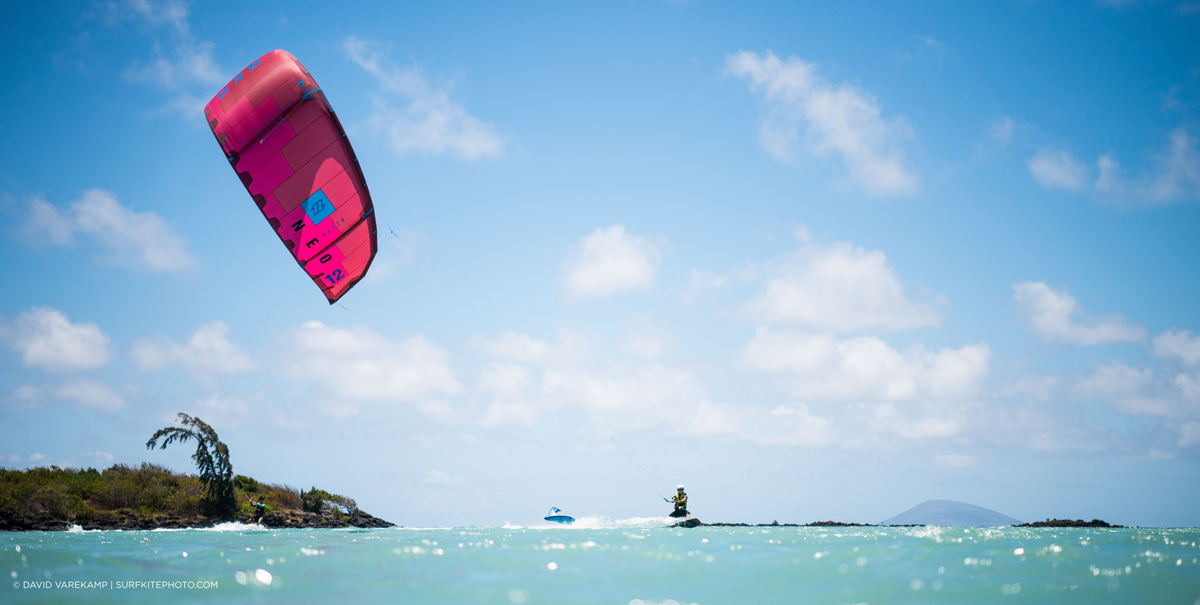
Kitesurfing is riding a board across the water while being pulled by a large, steerable kite. The kite flies on lines attached to a control bar, the bar clips into a harness around your waist, and the wind provides the power, not your arms. It looks extreme from the beach. Learned properly, in the right place, it’s a sport most reasonably active people can pick up in under a week. This guide explains how it works, what it really costs, how long it takes, and why where you learn matters more than anything else.
What kitesurfing actually is
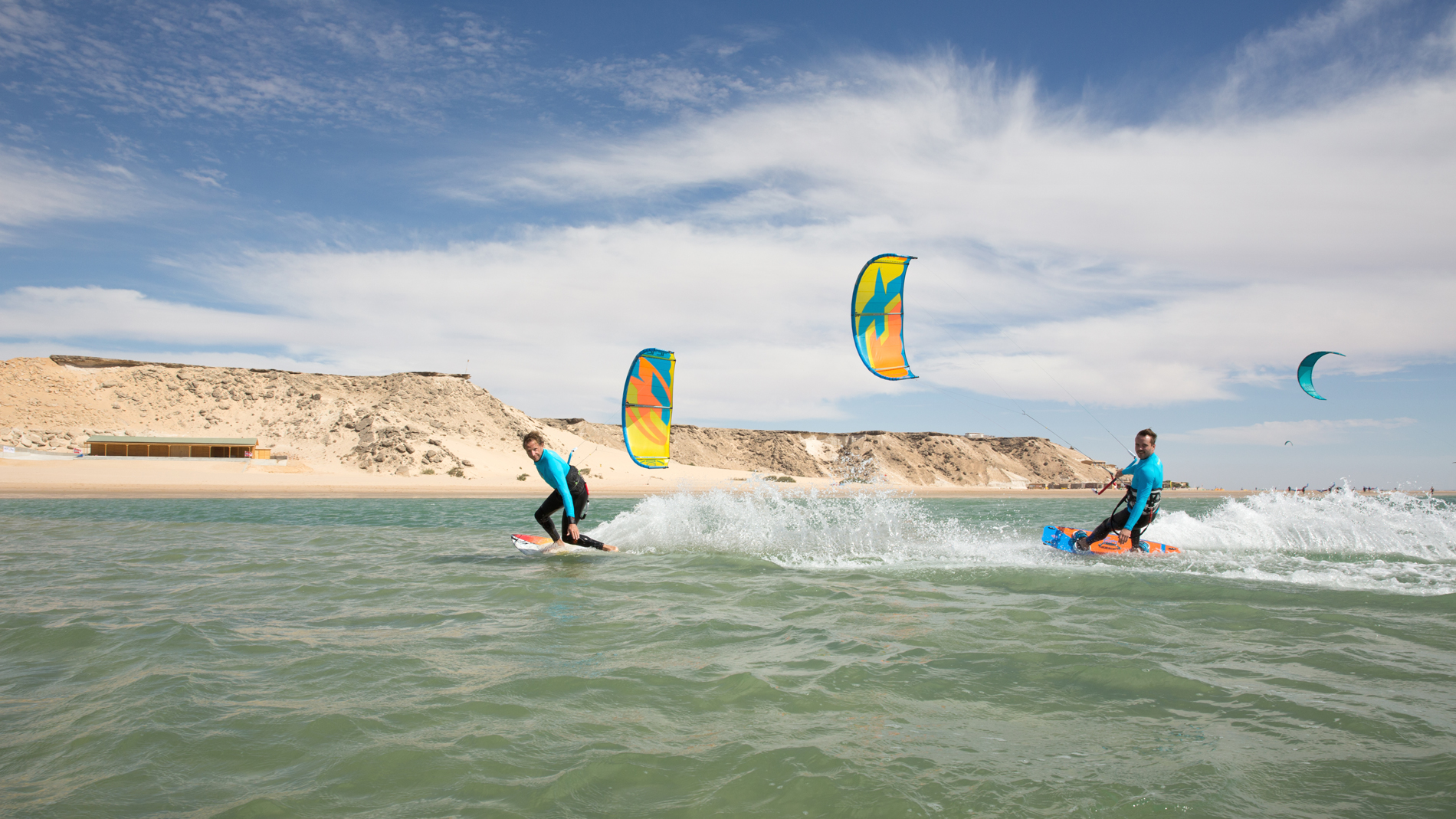
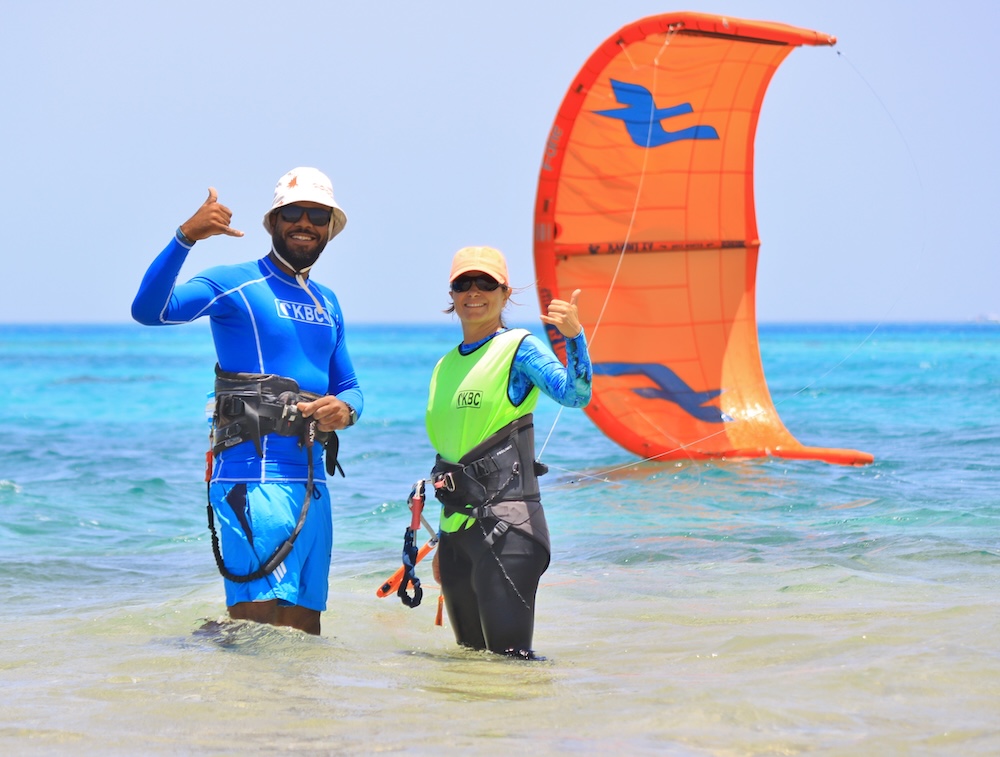
The kit is simpler than it looks. A modern kite is an inflatable wing, somewhere between seven and fourteen square metres for most riders, flying twenty-odd metres above you on a set of lines. The lines run to a control bar in your hands, and the bar connects to a harness around your waist — so the kite’s pull goes into your body, not your grip. Steering is like a bicycle handlebar: pull left to go left, pull right to go right, and push the whole bar away to switch the power off instantly. That last part is what changed the sport.
Underfoot, almost everyone starts on a twin tip: a board a little like a snowboard, symmetrical so it rides in both directions, but with open foot straps rather than fixed bindings — your feet slide out the moment you fall, which is exactly what you want. You ride by edging the board against the pull of the kite, the same feeling as a snowboard holding an edge on a slope. Wave riders graduate to surfboard shapes and foilers to hydrofoils, but the twin tip is where the sport starts.
One naming point that confuses almost everyone: kitesurfing and kiteboarding are the same sport. America says kiteboarding, most of Europe says kitesurfing, and some people reserve “kitesurfing” for riding waves on a surfboard. If you’re researching lessons, the two words are interchangeable.
A short history
The idea is older than most riders realise: the first patent for kite-powered surfing was filed back in 1977, and inventors — including the Legaignoux brothers, whose inflatable-kite patent of 1984 still underpins every kite on the water today — spent two decades making it workable. But it was on Maui in the late 1990s that modern kitesurfing took shape, when the island’s windsurfing pioneers started flying kites instead and proved the thing could actually be ridden.
By the early 2000s the first production kites and the first schools had arrived, and the sport hit the mainstream. Kitesurf holidays date from almost exactly the same moment: we started arranging them in 2001, the same year the International Kiteboarding Organization was founded — so we’ve grown up alongside the sport and seen every stage of it first-hand.
It used to be dangerous. It isn’t any more.
This is the part we can speak on with some authority, because we were there. The early C kites were absolutely vicious. There was little or no way to dump their power, release systems were rudimentary where they existed at all, and a gust arriving at the wrong moment could and did pick people up. The accidents in those early years were properly scary, and the sport’s dangerous reputation was earned.
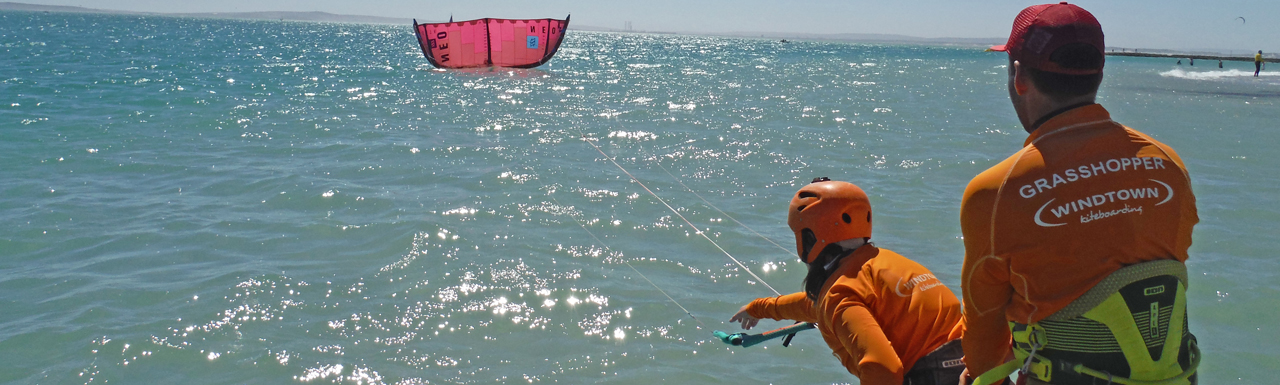
Then, over the next ten years or so, three things changed. Kite design moved to shapes that let you shed almost all of the kite’s power just by pushing the bar away. Every kite gained a proper quick-release that flags the kite dead in one movement, plus a final full-release behind it. And instruction became standardised through bodies like the IKO and, in the UK, the BKSA — so a beginner anywhere in the world now learns the same tested progression: kite control on land, body-dragging in the water, then the board.
The result is a very different sport. Taught properly, on modern equipment, in the right conditions, kitesurfing today is a managed-risk sport like skiing, not the wild west it was in 2001. The equipment has improved beyond recognition in twenty-five years, and that’s the single biggest reason an ordinary, reasonably fit person can now learn in days.
Kitesurfing vs windsurfing vs wing foiling
The three wind sports get confused constantly, and they feel completely different to do.
| Kitesurfing | Windsurfing | Wing foiling | |
|---|---|---|---|
| The power | Kite on 20m lines, hooked to a harness | Sail on a mast, attached to the board | Handheld inflatable wing, attached to nothing |
| First hours | Slower — kite control comes before the board | Faster — you can be sailing in an afternoon | In between — wing first, then the foil |
| Getting good | Fast once riding — jumping comes surprisingly soon | Long road to planing, carving and waves | The foil takes a few days, then it clicks |
| Wind needed | Moderate — big kites work in less wind | More for real excitement | Least of the three, thanks to the foil |
| Luggage | One bag: kite, bar, board | The bulkiest kit in watersports | Compact — wing deflates, board is small |
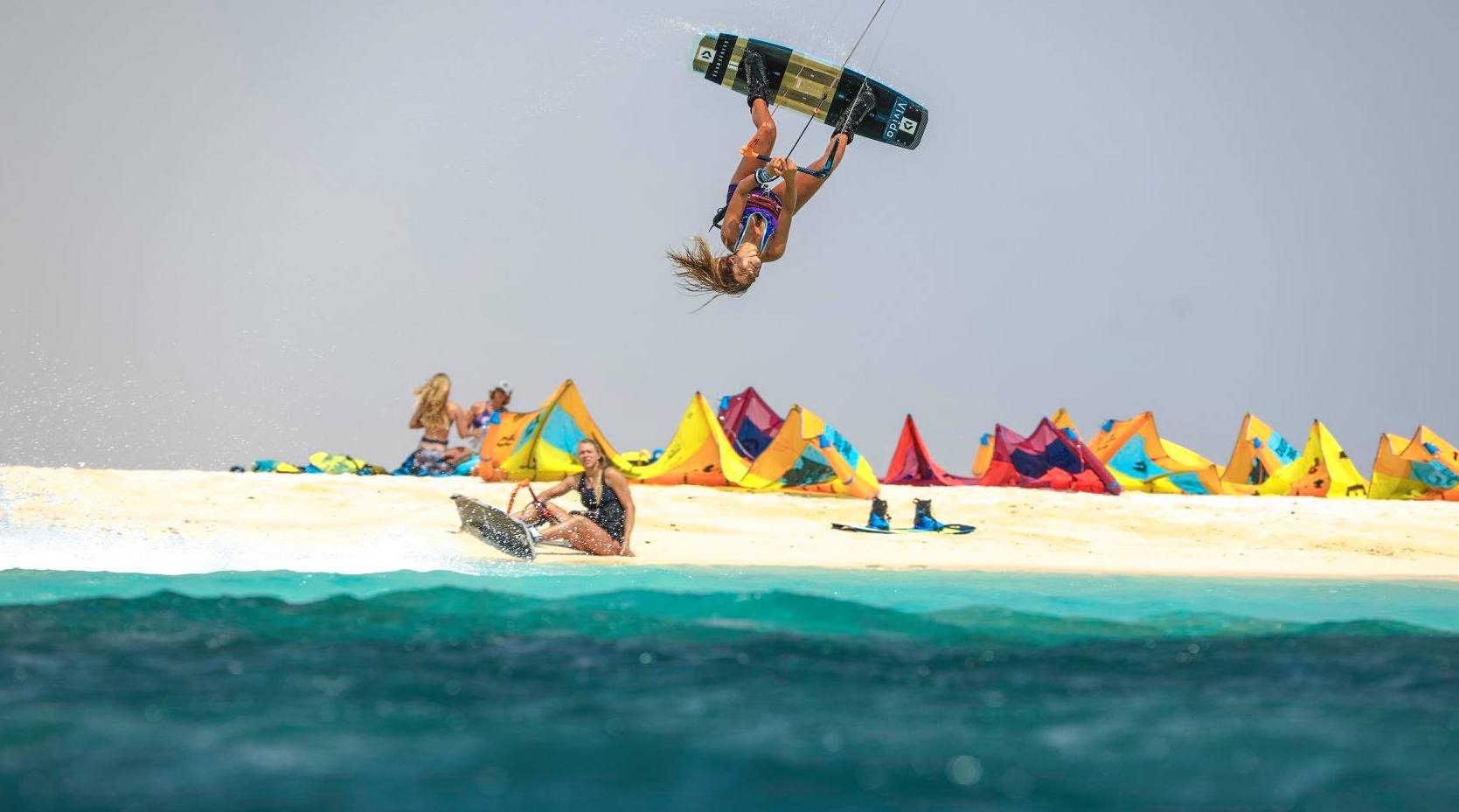
On learning speed: windsurfing rewards you faster on day one, kitesurfing rewards you faster after week one. A windsurf beginner stands up and sails within hours, then spends years chasing the skills that make it thrilling. A kitesurf beginner spends the first days on kite control without riding a metre — then progresses very quickly once the board goes on, with first jumps sometimes weeks rather than years away. Windsurfing and wing foiling are both sports we also arrange holidays for, so we say this with no axe to grind: they’re all wonderful, and they suit different people.
What kitesurfing costs
Real numbers, as of 2026:
| What | Typical cost | Notes |
|---|---|---|
| Lessons (UK) | ~£150 a day; £300–£400 for a 3-day beginner course | Weather-dependent — rebooking is common |
| Lessons (on holiday) | Similar rates, often bundled with the trip | Consistent wind means far fewer wasted hours |
| Full new kit | £1,500–£3,500 | Kite, bar, board, harness, wetsuit; wide range by brand and spec |
| Good secondhand kit | Roughly half of new, often less | Buy recent-generation kites; have a school check them |
| Running costs | Low | No lift pass, no fuel, no club fees; kit lasts years if rinsed |
The sensible order: don’t buy anything until you can ride. Learn on a school’s equipment — it’s insured, current and matched to the day’s wind — and buy your own once you know your size and style. Compared with skiing, it’s expensive to get into and cheap to keep doing: after the kit, there’s very little left to pay for.
How long does it take to learn?
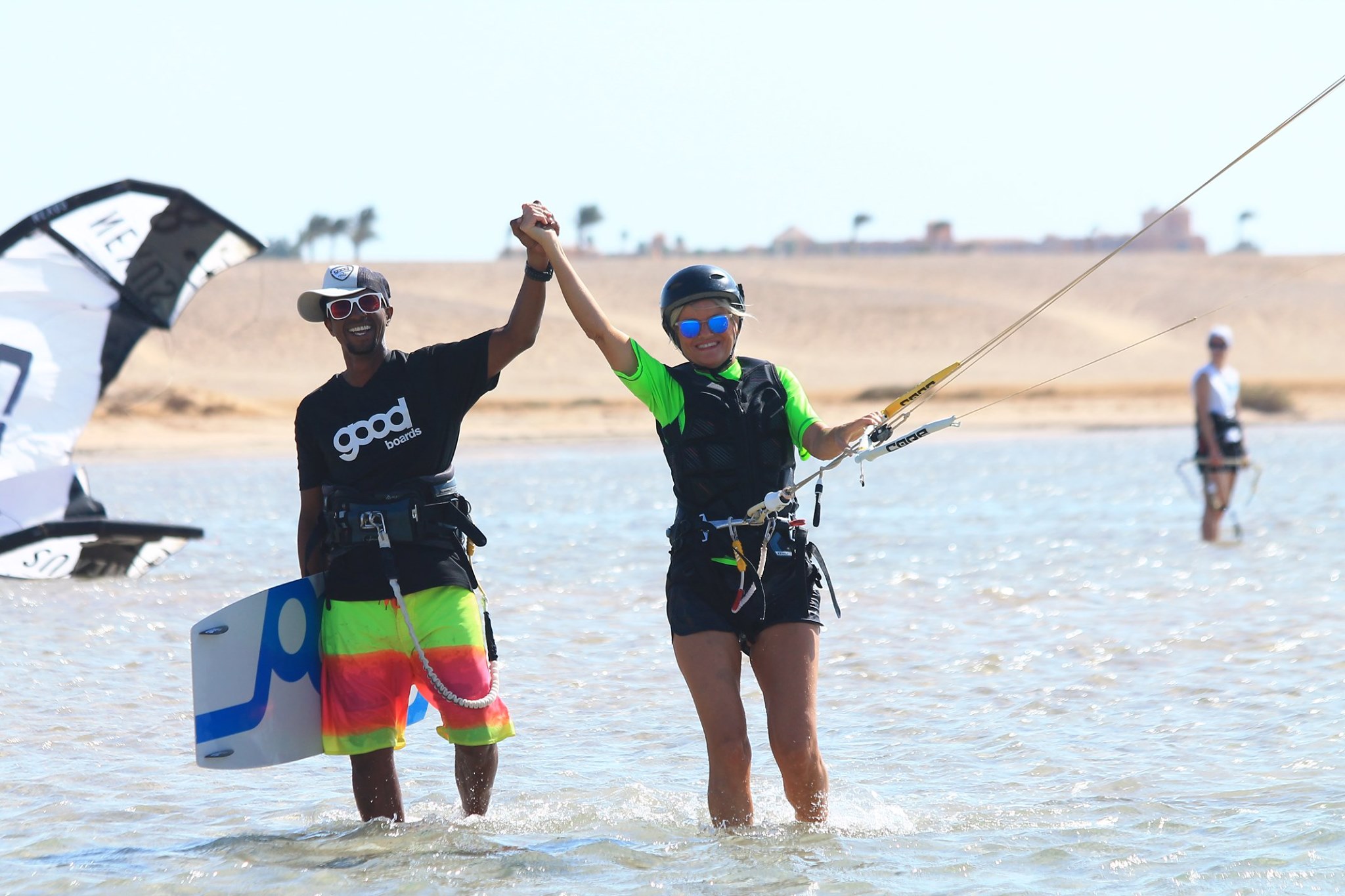
For most people, eight to twelve hours of instruction, spread over three to five days, gets you to the milestone that matters: riding independently in both directions and coming back roughly where you started. Some get there faster (a board-sport background helps, as does any kite-flying experience) and some need a few more hours, which is normal and fine.
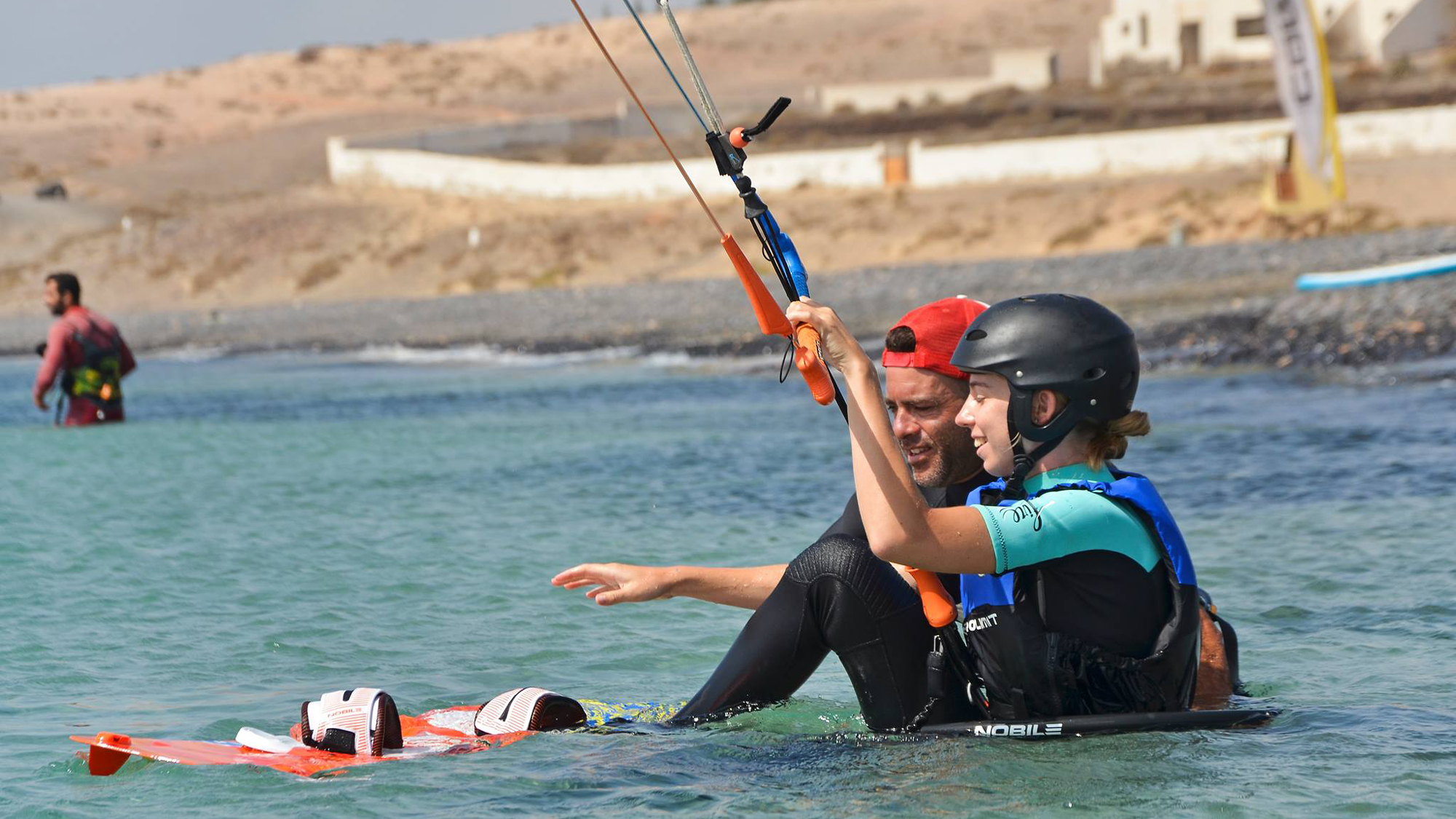
What actually decides how fast you learn is the conditions, not you. Ten hours of lessons in flat, waist-deep water and steady wind might happen across three consecutive days. The same ten hours at home can take a whole season, which brings us to the thing we’ve heard from clients every week for twenty-five years.
Why learning at home is so hard
The commonest story we hear goes like this: someone books lessons at their local spot, and then real life meets British weather. The wind is right on Tuesday, but they work Tuesdays. Saturday comes and it’s ten knots, or thirty-five, or howling straight onshore. The tide is wrong for the lagoon at the weekend. The instructor is booked out for the two good days a month. Six months later they’ve had three usable sessions, the skills learned in each one have half-faded before the next, and a sport that should take a week has turned into a slog.
None of that is the school’s fault — UK and northern-European schools do a great job in difficult conditions. It’s just arithmetic: learning to kitesurf needs consecutive days of the right wind in the right place, and at home they rarely line up.
The shortcut: learn where the conditions are guaranteed
Which is why our standing advice, twenty-five years in, hasn’t changed: if you seriously want this sport, take one to two weeks somewhere the conditions are close to perfect, and get the basics done properly. You’ll come home an independent rider, ready to practise locally whenever the weather plays, rather than someone still waiting for lesson three.
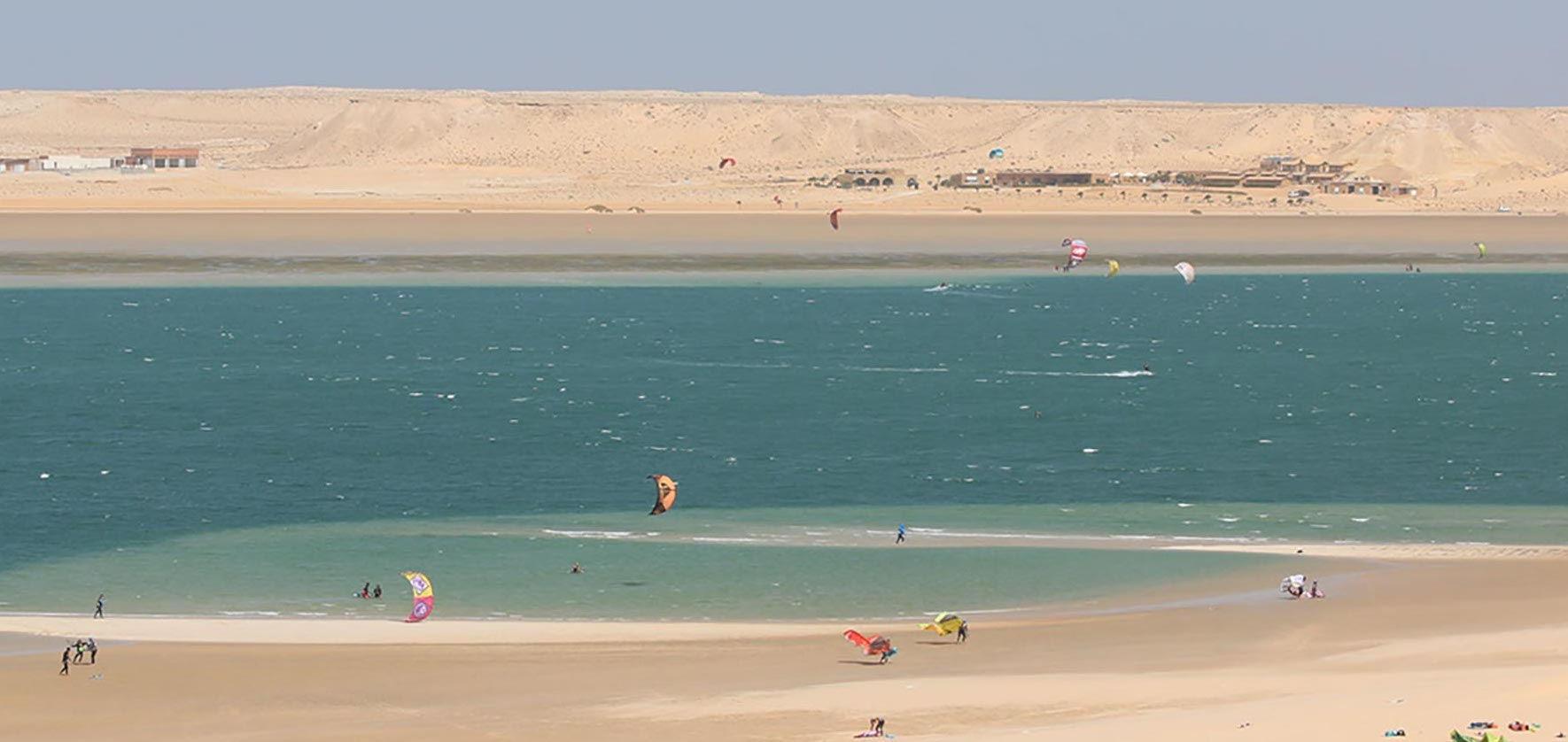
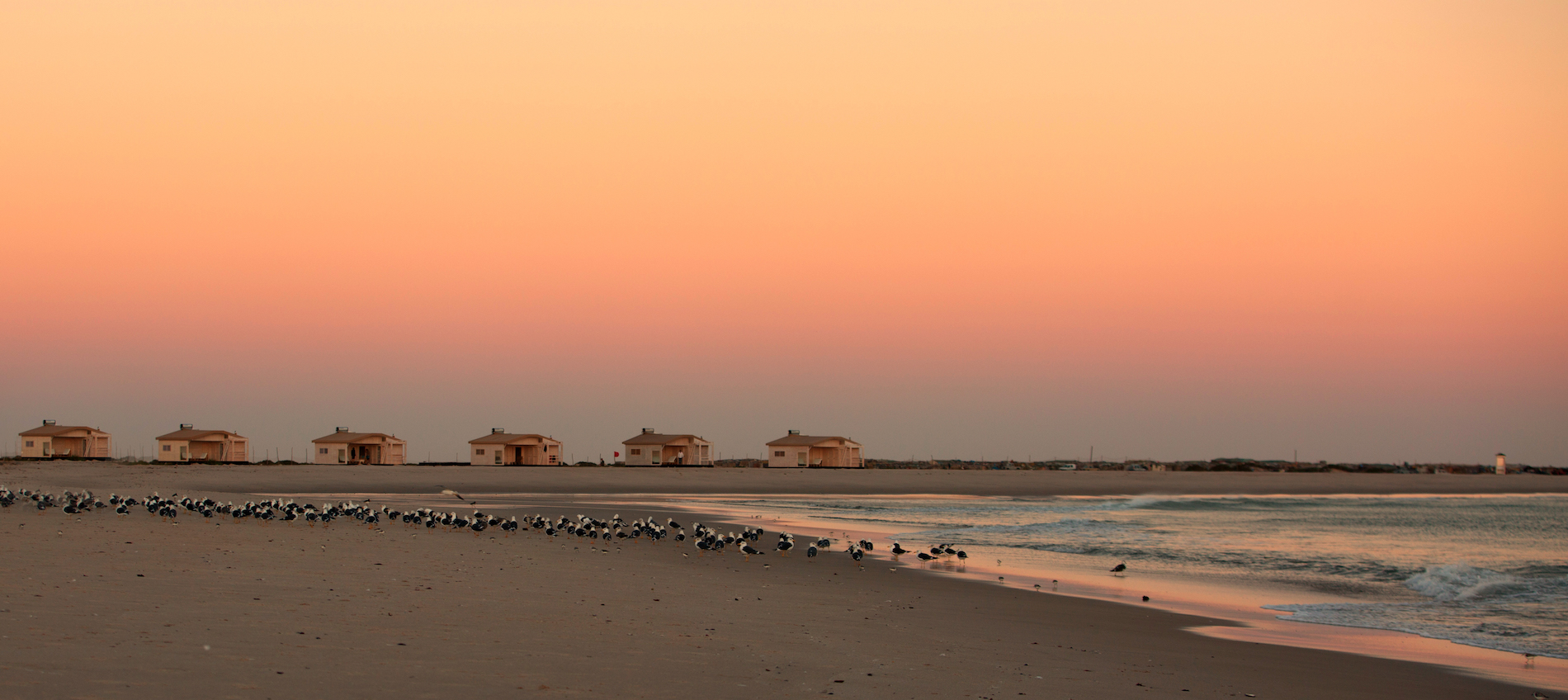
A perfect learning spot looks like this: flat, waist-deep water you can stand up in when things go wrong; a big open space with no crowds, rocks or open sea to drift into; wind that shows up on schedule, day after day; and a well-run school with current equipment teaching to IKO or equivalent standards. In practice that means lagoons, giant sandbar-sheltered bays and enclosed flats — which is exactly why the famous learning spots are where they are: the Dakhla lagoon in Morocco, Soma Bay on the Red Sea, and the Le Morne lagoon in Mauritius among them. Our learn-to-kitesurf holidays are built around exactly these places.
Frequently asked questions
Is kitesurfing hard to learn?
Harder than paddleboarding, easier than it looks. The odd part is that the hard bit comes first: you spend the first days learning to fly the kite before you ride a metre, and then progress speeds up. Most people ride independently within eight to twelve hours of instruction in good conditions.
Is kitesurfing dangerous?
It was — the early equipment had little safety engineering and the sport’s reputation dates from that era. Modern kites shed almost all power the moment you push the bar away, carry a one-movement quick-release, and instruction is standardised through bodies like the IKO and BKSA. Taught properly in the right conditions, it’s now a managed-risk sport comparable to skiing. Never teach yourself. That’s where nearly all the remaining risk is.
How much does kitesurfing cost?
A three-day UK beginner course runs about £300–£400 (around £150 a day). A full set of new equipment is £1,500–£3,500, with good secondhand kit at roughly half that. After the entry cost it’s a cheap sport to run — the wind is free.
How long until I can ride independently?
Eight to twelve hours of instruction over three to five consecutive days, for most people, in flat water and steady wind. The same hours spread over months of inconsistent home weather take far longer, because skills fade between sessions.
Do I need to be strong?
No, and this surprises everyone. The kite’s pull goes into a waist harness, not your arms, so general fitness matters more than strength. Kids from around ten or twelve learn at dedicated schools, and we book plenty of riders in their sixties and beyond.
What’s the difference between kitesurfing and kiteboarding?
Nothing — they’re two names for the same sport. Kiteboarding is the usual term in North America, kitesurfing in Europe; some riders reserve “kitesurfing” for wave riding on a surfboard.
Can I teach myself?
Please don’t. A kite generates serious power, and every part of modern kitesurfing safety assumes you were shown how to use it — launch, land, self-rescue, release. Lessons are also simply faster: a school will get you further in three days than trial and error will in a season.
Where’s the best place to learn to kitesurf?
Somewhere with flat, waist-deep water, a huge sheltered space, and wind that arrives on schedule — in practice, the world’s great lagoons: Dakhla in Morocco, Soma Bay in Egypt, Le Morne in Mauritius. A week in one of them is the quickest way into the sport.
Ready to try it?
Tell us your dates, your rough fitness and who’s coming with you, and we’ll suggest the two or three learning spots that suit you best — with the school, the hotel and the flights arranged as one booking. We’ve been doing this since 2001, and every resort we sell has been ridden by our own team.
See our learn-to-kitesurf holidays or call +44 1273 921 001.
Free, with no obligation and no booking fee. We’re a UK tour operator, trading since 2001. Mon–Fri, 09:00–18:00 UK · 5★ on Google from 190+ reviews · ATOL protected (T7314) and Travel Trust Association members.
Once you can ride, the next question is where to go. Our guide to the best kitesurfing holidays ranks 15 places by wind, water and how far you have to fly.