The Best Places to Learn to Kitesurf, and What Actually Makes a Spot Good
The best place to learn to kitesurf is somewhere you can stand up, in wind that is steady rather than gusty, with no more than two students per instructor and a school within walking distance of your room. Get those four right and most people are riding independently in three to four days. Get them wrong and a week is not enough.
The four things that actually matter
Destination lists usually rank on scenery. Here is what decides whether you leave able to kitesurf.
1. Water you can stand up in
This is first by a distance. Almost all lost time when learning is spent swimming — back to a board, back upwind, back to shore. In waist-deep water a mistake costs you a moment; in deep water it costs you ten minutes and a lot of energy.
2. Steady wind, not strong wind
Beginners do not need 25 knots. They need 15 knots that stays at 15. Thermal and trade winds are steady and predictable; gusty gradient wind on a lee shore is what makes people give up.
3. Two students per instructor, maximum
Above two, you spend most of the lesson watching. We recommend a maximum of two, and private tuition if the budget allows — it is usually the highest-value upgrade on the whole trip.
4. The school is where you sleep
A 30-minute transfer each way turns three sessions into one. When the wind is a thermal that arrives at a particular hour, being able to walk down when it fills in is worth more than any facility.
The spots that have all four
| Where | Water | Season | Best for |
|---|---|---|---|
| Lo Stagnone, Sicily | Waist-deep lagoon | Apr–Oct | Shortest flight, easiest conditions in Europe |
| Dakhla, Morocco | 40 km flat lagoon | Year-round | Most wind days; bring a wetsuit |
| Soma Bay, Egypt | Shallow flat lagoon | Mar–Nov | Warm water, short flight, reliable |
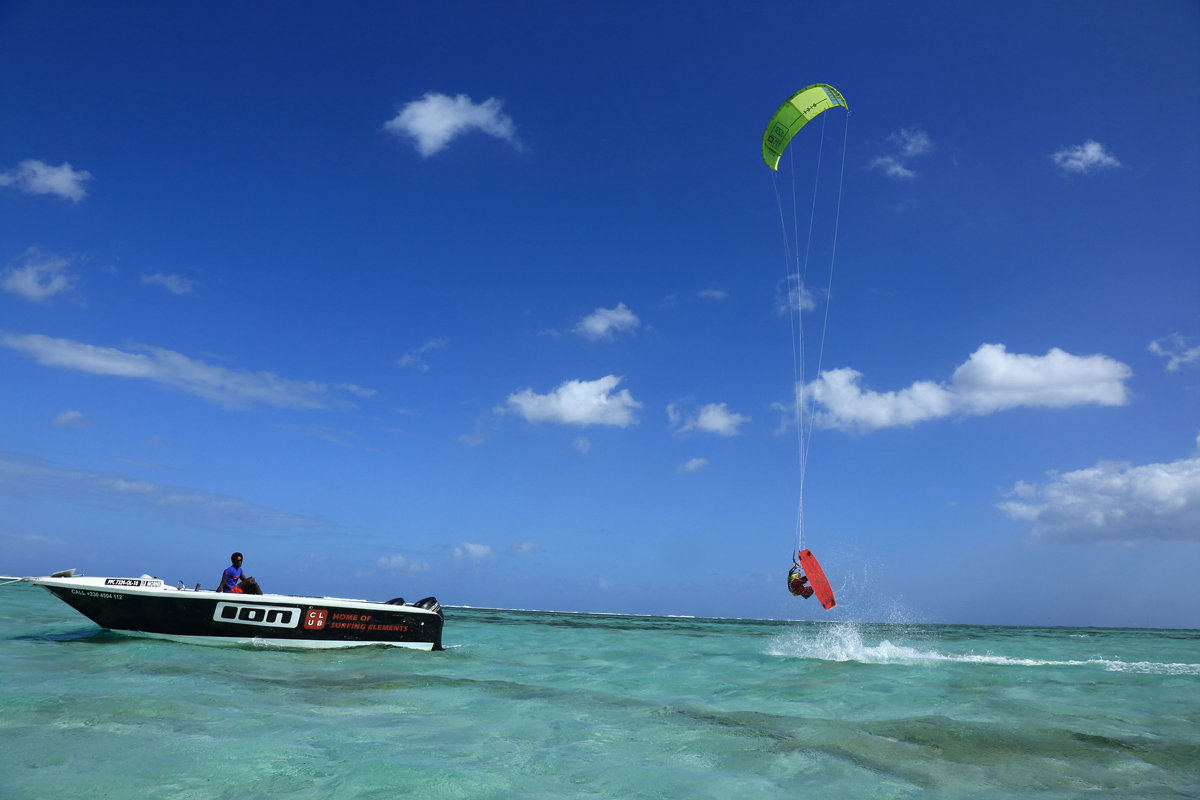
| Le Morne, Mauritius | Shallow sandy lagoon | Jun–Nov | Learning inside a proper resort holiday |
| Kos, Greece | Shallow bay | May–Sep | Short-haul family option |
| South Fuerteventura | Shallow at the right tide | Apr–Oct | Four-hour flight, reliable summer wind |
| Ilha do Guajiru, Brazil | Huge flat lagoon | Jul–Jan | Most consistent wind anywhere, if you have two weeks |
| Kalpitiya, Sri Lanka | Shallow lagoon | May–Oct | Learning as part of a bigger trip |
Where not to learn
Some superb kitesurfing destinations are poor teaching destinations, and it is worth saying so plainly. Cape Town has strong wind, cold water and shore break. Tarifa is gusty and crowded. Anywhere with a reef bottom, offshore wind or a big tidal range costs you hours you cannot afford in a first week.
Zanzibar is the instructive case: a beautiful flat lagoon, but tide-dependent, so a beginner gets a fraction of the usable hours. Wonderful once you can ride. Frustrating when you cannot.
How long it takes
Three to four days of tuition, around three hours a day, is what most people need to be riding short runs on their own. That is a week’s holiday with room for weather. Anyone promising it in a weekend is selling you a weekend.
For courses, schools and packages, see learn to kitesurf holidays. Travelling with children? Family kitesurf holidays covers the ages and the childcare question.
Learning this year?
Tell us when you can travel, whether anyone is coming with you and how much of a beach holiday you want alongside the lessons. We will match you to a school with the right ratio and a hotel you can walk to the water from — one price, flights and tuition included.
Free, with no obligation and no booking fee. We’re a UK tour operator, trading since 2001 —
every resort we sell has been ridden by one of our own team. Mon–Fri, 09:00–18:00 UK ·
5★ on Google from 190+ reviews · ATOL protected (T7314) and Travel Trust Association members.
Frequently asked questions
How long does it take to learn to kitesurf?
Most people need three to four days of tuition, roughly three hours a day, to be riding short runs independently in good conditions. Flat, shallow water and steady wind cut that down; deep water, gusty wind or big groups stretch it out.
What makes somewhere good for learning?
Four things, in order: water you can stand up in, wind that is steady rather than gusty, a small instructor-to-student ratio, and a school close enough to your room that a session is not an expedition. Warm water helps but matters less than the first four.
What is a good instructor-to-student ratio?
Two students per instructor is our recommended maximum, and private tuition is better if the budget allows. Above that, you spend most of the lesson watching someone else use the kite.
Is it better to learn at home or on holiday?
On holiday, almost always. Learning needs consecutive days in consistent conditions, which UK weather rarely provides. A week somewhere reliable typically achieves more than a whole summer of weekend lessons at home.
How old do children need to be to learn?
Most schools teach from around 10–12 years, depending on the child’s weight, strength and water confidence. Below that, land-based kite control and trainer kites build the right instincts safely.