Last updated: 1 September 2026 · written by the team who ride these spots
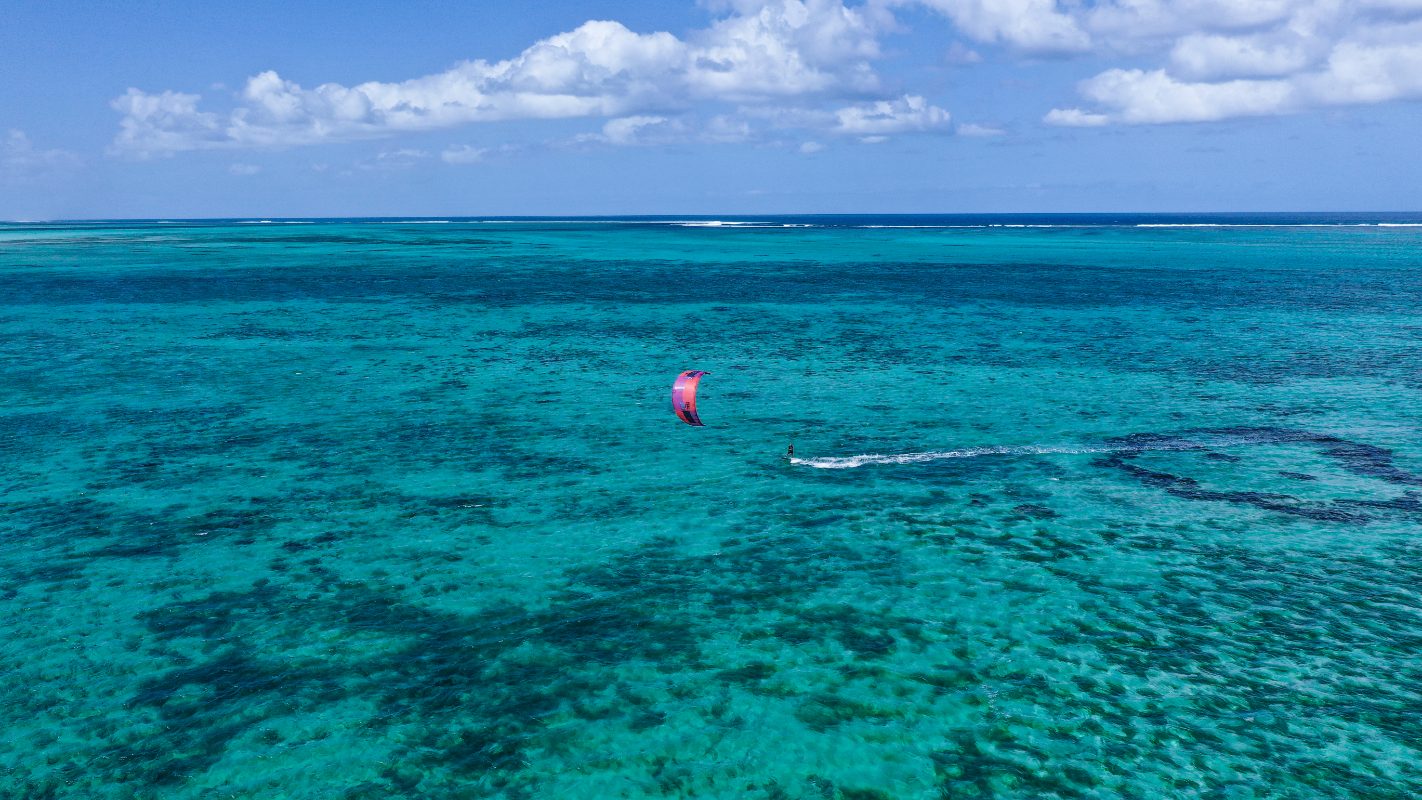
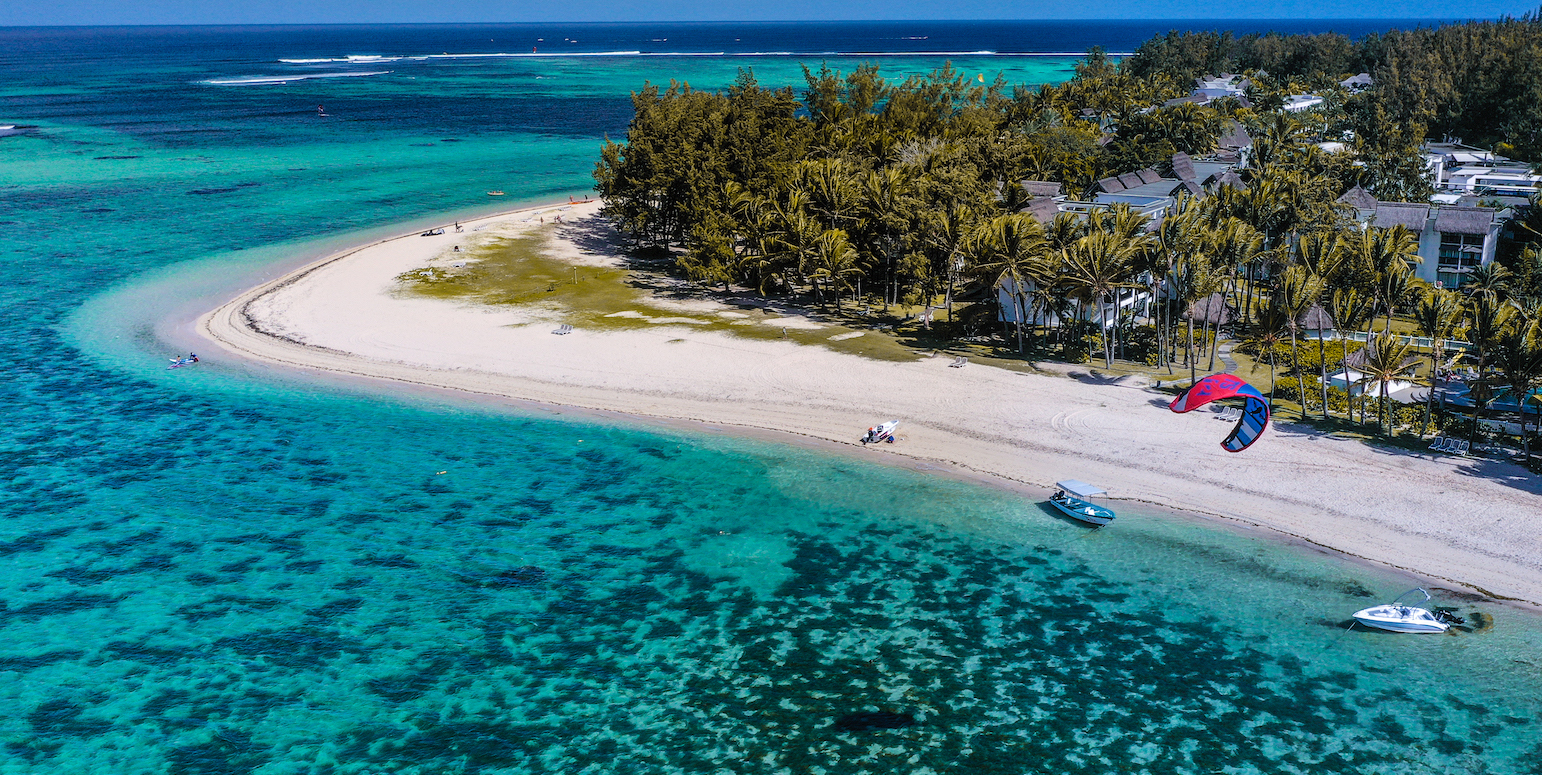
Le Morne, on the south-west tip of Mauritius, is one of the few places where a complete beginner and an expert wave rider can have a great day on the same beach. A shallow, flat, sandy lagoon sits inside the reef for learning and freestyle; the reef breaks (Little Reef, Manawa and One Eye) sit outside it, roughly 500 metres away. The season runs May to November, with 18–25 knot trade winds and water around 26–29°C.
Why Le Morne is different
Plenty of destinations have a flat lagoon. Plenty have a serious wave. Very few have both, 500 metres apart, directly in front of hotels you would actually want to stay in.
That is the whole case for kitesurfing in Le Morne. The basalt monolith of Le Morne Brabant (a UNESCO World Heritage site) rises straight out of the sea behind you, the lagoon in front is turquoise and waist-deep, and the reef pass is close enough to watch from your sun lounger. It means a mixed-ability group (a learner, an intermediate wanting flat water, and a wave rider) can all be satisfied without anyone driving anywhere.
Most destinations force a choice: flat water or waves, safe or serious, learner-friendly or worth the airfare. Le Morne asks you to make none of them, which is why so many riders end up returning.
The lagoon: where most people ride
The kite lagoon is large, shallow and sandy. Through most of it you can stand, which changes everything when you are learning: a botched water start ends with you standing up, not swimming. The bottom is sand rather than coral, with a handful of larger rocks well away from the beach that the schools will point out on your first briefing.
For freestyle and flatwater riding, the space is the point. There is enough room that you are not queuing for a run, and the water inside the reef stays flat even when there is real swell outside.
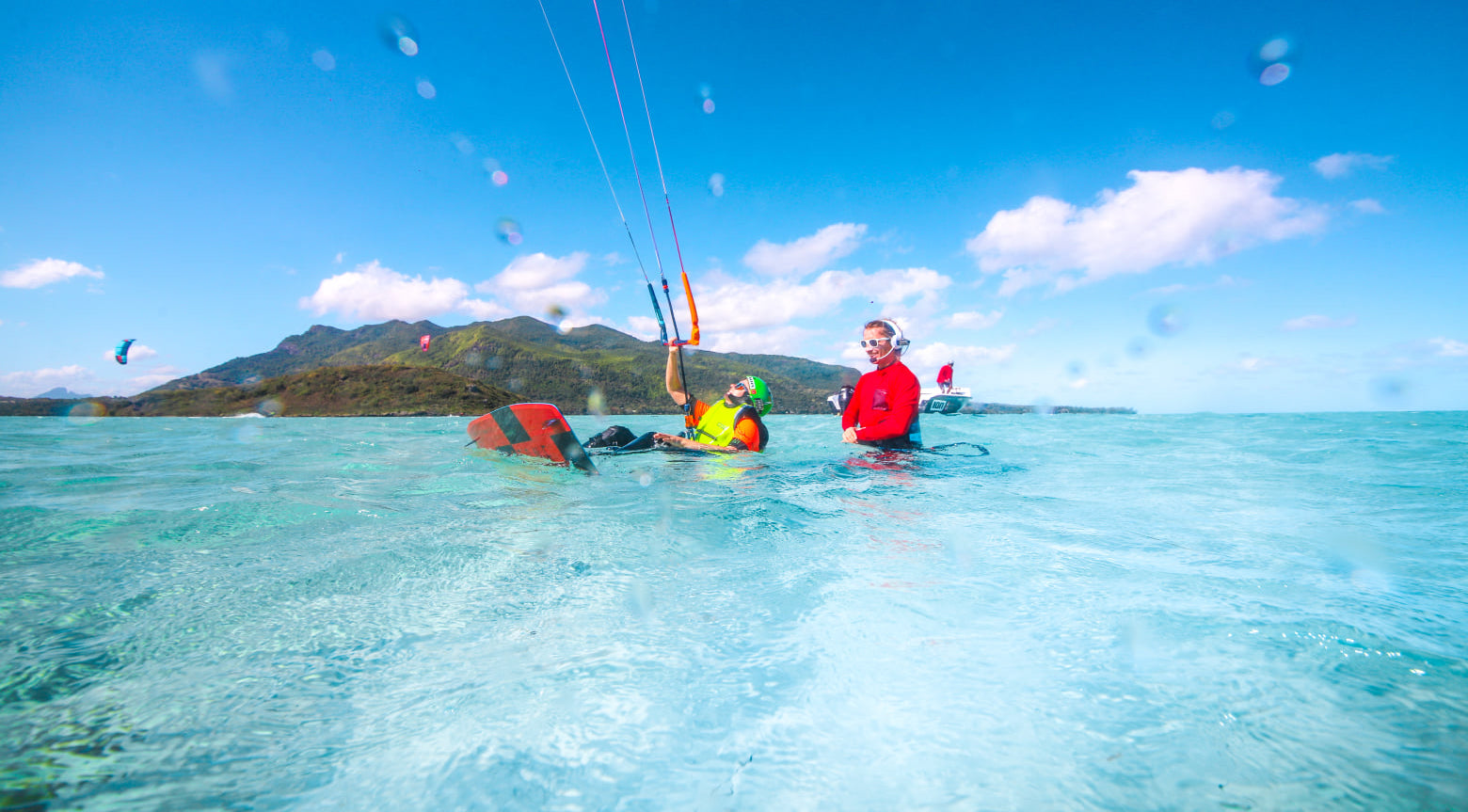
Plenty of visitors spend a full week without leaving the lagoon, and there is nothing second-best about that.
The three reef breaks
What makes Le Morne unusual is that the step up from lagoon to serious wave riding happens in stages rather than all at once. Three breaks sit outside the reef, and they are not interchangeable.
| Where | What it’s like | Who it’s for |
|---|---|---|
| The lagoon | Flat, shallow, sandy, reef-protected, side-shore wind | Beginners, improvers, freestyle |
| Little Reef | Gentler walls, close to the safety of the channel | A first taste of wave riding |
| Manawa | Long left-handers over deeper water, channel alongside | Building genuine reef confidence |
| One Eye | Fast cross-offshore left over shallow coral, a long way out | Experienced wave riders only |
Little Reef
The natural first step. The walls here are more forgiving than anything further out, and the channel is close enough to give you an exit if a set arrives that you would rather not be under. Riders who have never surfed a wave on a kite should start here rather than at Manawa, however tempting the latter looks from the beach.
Manawa
For most riders, Manawa is the more rewarding of the two famous breaks, and it is the one we suggest people aim for. The lefts run long and peel over deeper water, so there is time to set a rail and actually ride rather than react. Because the channel sits alongside it, a mistake usually means an inconvenience rather than an emergency — which is exactly what you want while you are learning what a reef wave demands.
One Eye, and being honest about it
One Eye is the reason a lot of experienced riders come to Mauritius at all. It is a left-hand reef break off the tip of the peninsula, named after the gap in the mountain behind that you line up through. It breaks over shallow reef, it has real power, and on a good day it produces the kind of down-the-line riding people plan a year around. It is also the backdrop to a great many of the sport’s best-known photographs.
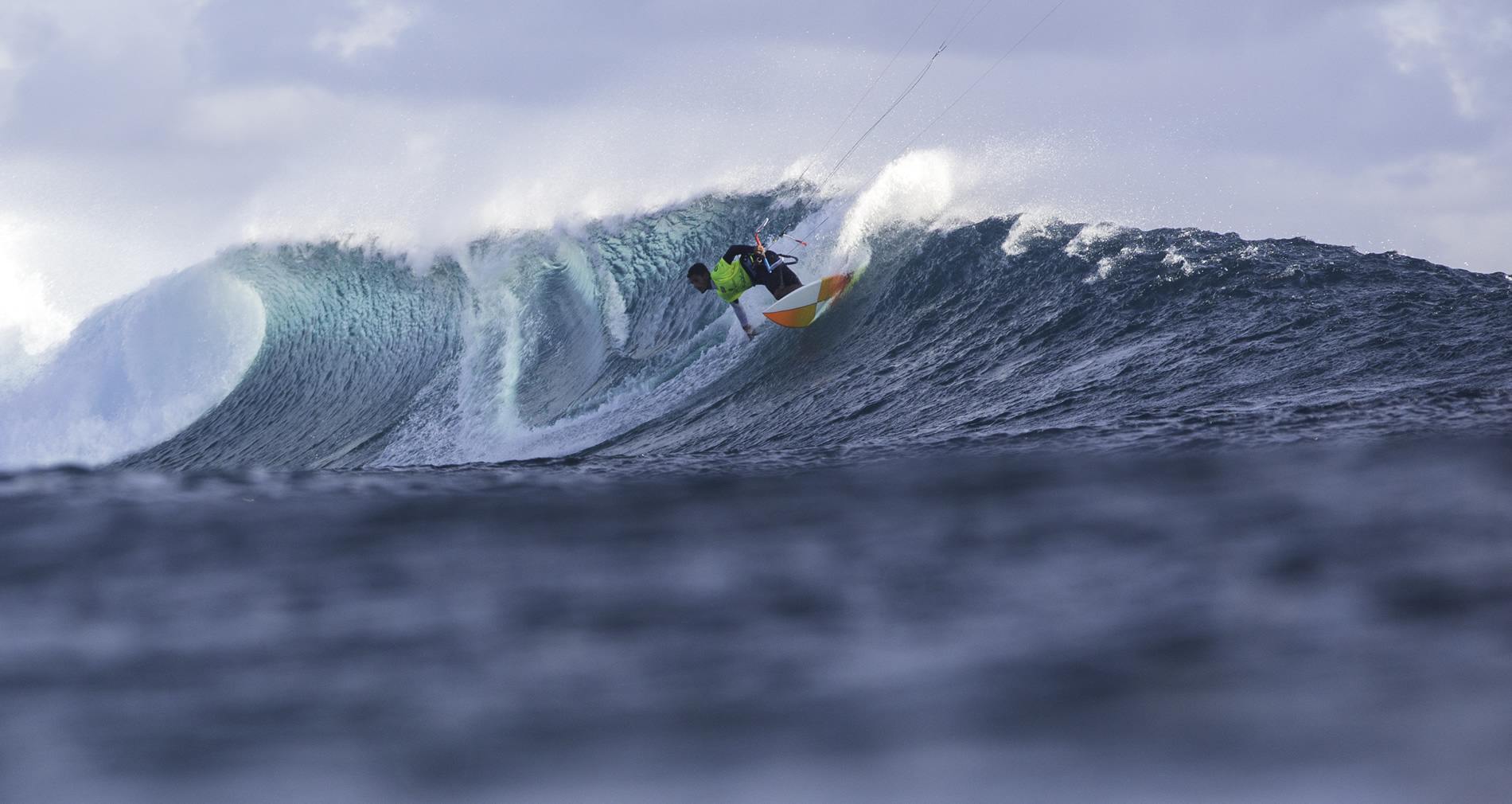
It is also further offshore than photographs suggest. By the time you reach it, the mountain behind you looks small, you are a long way into the Indian Ocean, and the wind is blowing away from land over a reef with very little water on it. Reaching it means leaving the lagoon through the pass and crossing deep water; a self-rescue out there is a long swim in a strong current.
If you are not already comfortable riding waves in powered conditions and self-rescuing without help, the honest answer is that One Eye is a thing to watch this trip and ride the next one. The local schools will tell you the same, and they will tell you straight.
What actually catches people out
Here is the part that surprises most visitors: the wave itself is easier to ride than its reputation implies. The difficulty at One Eye is not the drop or the speed. It is what happens after a mistake.
The reef is shallow, so a kite in the water can end up caught across coral while you are dragged over it trying to recover. The great majority of serious incidents at this break start with a dropped kite rather than a wave that was too big — which makes kite control, not wave skill, the thing worth being honest with yourself about.
Crowding is the other factor, and it works in a way people find counter-intuitive. Small days draw the biggest numbers, because that is when the wave looks approachable, and the lineup can get disorganised. As the swell builds, numbers fall away. Knowing who has priority and holding your line when someone drops in matters here as much as it does in any surf lineup.
Getting out to the breaks
Reaching the waves is part of the day, and a little local knowledge saves a lot of effort.
The main channel is the straightforward route out to Manawa, though a considerable volume of water moves through it and it deserves respect. On higher tides it is possible to cut across the reef towards One Eye, which is quicker but an easy way to catch a fin if you misjudge the depth.
On bigger days, the route worth considering is out through the channel and then back down onto One Eye from behind. It takes longer on paper, but it keeps you out of the largest sets on the way out and turns the journey into something far more relaxed than punching through them.
Two practical points to build into the plan. The ride home is upwind and long if you return the way you came. And the trades commonly soften through the late afternoon — so leave yourself more wind than you think you need to get back, and do not head offshore unless you are confident.
One more thing worth packing. With so much attention on big air at the moment, wave riding gets overlooked, and Le Morne is among the best places in the world to do it. If you are flying this far, bring a surfboard.
When to go
The south-east trades blow side-shore to side-onshore across the beach through the main season, May to November. Mornings are often lighter, with the wind filling in through late morning and holding into the afternoon. Most riders are on 9–12m kites.
| Months | Wind | Best for |
|---|---|---|
| May – November | 18–25 knots, most reliable | The main season, all levels |
| June – September | Strongest wind, biggest swell | Wave riders; One Eye at its most serious |
| September – October | Strong but not relentless | The best all-round trip |
| December – April | Lighter, less dependable | Lagoon cruising, foiling, families, quieter island |
If your dates are fixed and wind matters more than anything, aim at July to September. If you want the best all-round trip, September and October are hard to beat. From December to April the wind is lighter and less reliable — that does not make it a write-off, but if the reef is the reason for the trip, book inside the main season.
Who Le Morne suits — and who it doesn’t
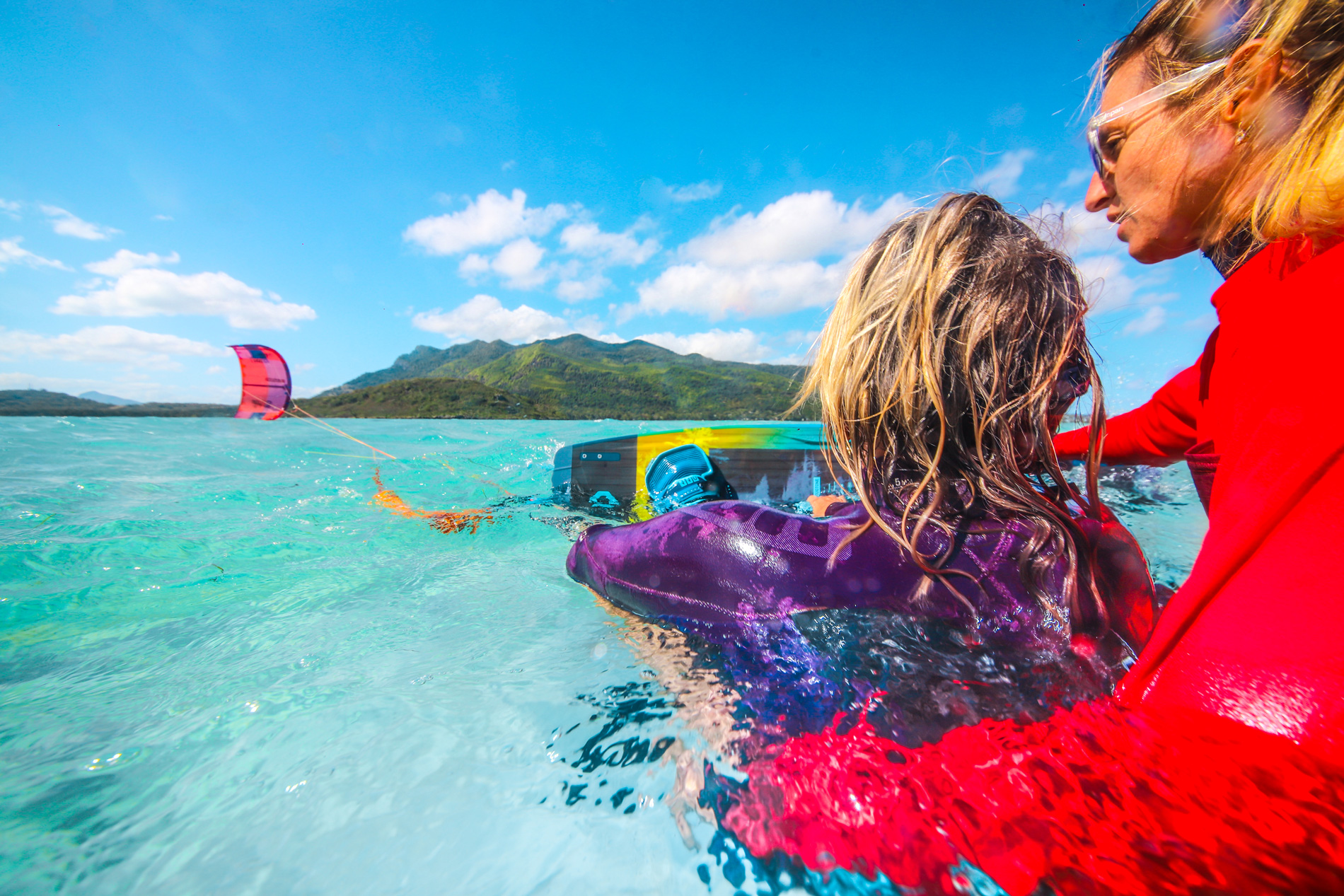
It suits beginners who want shallow, forgiving water with a proper school on the beach; intermediates chasing flat water; wave riders with reef experience; and anyone travelling with a non-kiting partner or family, because the resorts are good.
It suits less well anyone chasing guaranteed daily wind on a short trip — the trades are reliable but not mechanical, and a light day happens. It is also not a budget destination. If cost is the deciding factor, Dakhla in Morocco or Soma Bay in Egypt deliver more wind per pound.
Where to stay, and why the choice matters
This is the decision people most often get wrong, and the one our team spends the most time on. Le Morne is not a single kind of holiday — it splits three ways, and the right answer depends on who is travelling with you.
On the beach
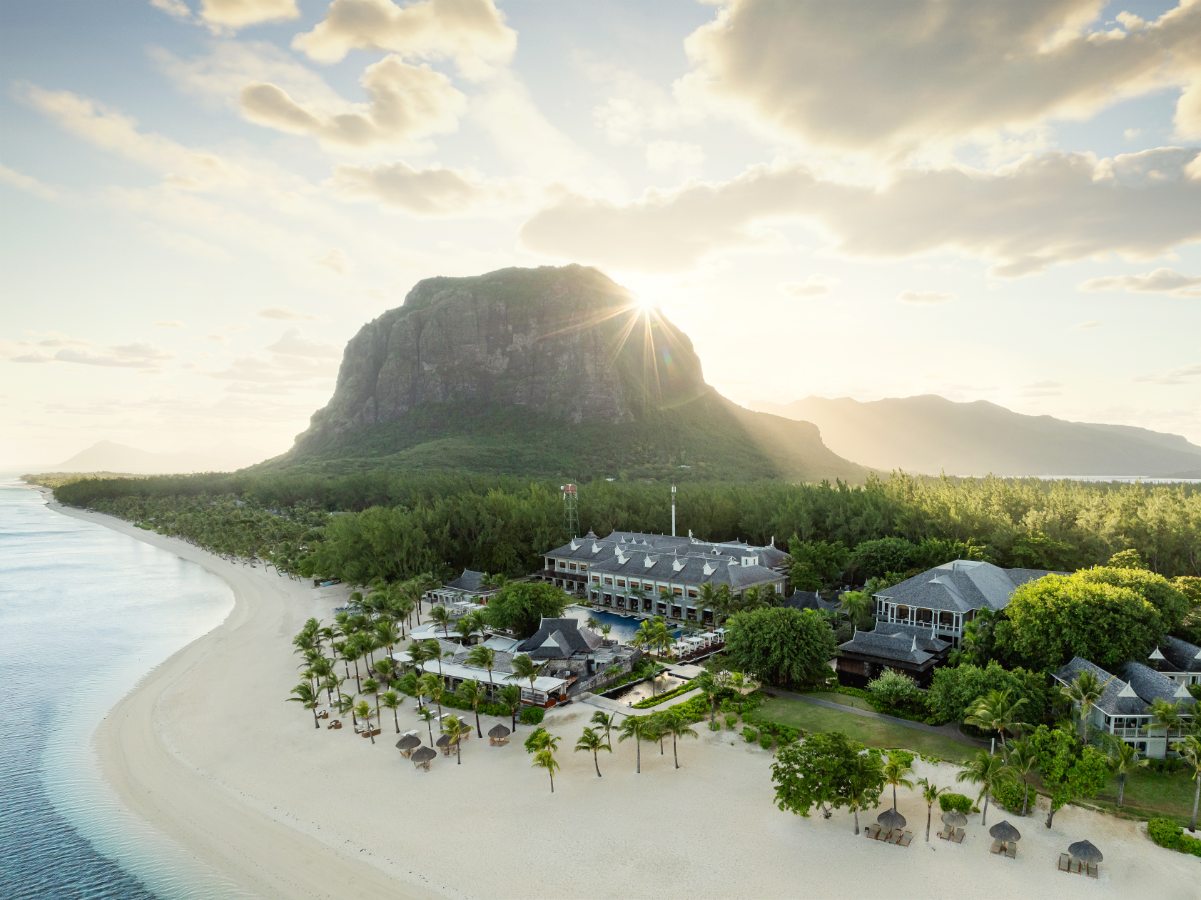
This is the choice if you want to carry your kit to the water rather than drive to it, and it is comfortably the best option when a partner or children are coming along and will not be kiting. The St Regis Mauritius Resort and Paradis both sit on the lagoon. Groups travelling together often take a fully serviced villa instead, such as the St Regis Grand Beachfront Villa, the Luxury Le Morne Villa or the West Coast Luxury Beach Villa.
La Gaulette
A few minutes inland, the village of La Gaulette has become the base for the kitesurfing community on this side of the island, and many experienced travellers choose it deliberately over the resorts.
The appeal is straightforward. It costs less, the beach is a short drive rather than a walk, and the evenings have a different character — small cafés and Creole restaurants, shops stocked well enough to self-cater for a week, and conversations that tend to end up on tomorrow’s forecast. It is a more ordinary, more local week than you will have inside a resort’s grounds, and for a lot of riders that is the point. Our options here include the La Gaulette Superior Apartment, the Premium Apartments La Gaulette and Black River Marina Luxury Apartments.
One caveat worth stating plainly: if your partner does not kite, the resorts usually make for a happier week than the village.
The rest of the island
Le Morne is not automatically the right base. Bel Ombre in the south is quieter, with Heritage Le Telfair and Tamassa both on the beach. In the north, The Westin Turtle Bay and Zilwa Attitude sit near the Anse La Raie lagoon. The east coast has LUX Belle Mare and Salt of Palmar, and the south-east has Anantara Iko and Shandrani.
We publish the full picture on the Le Morne resort page, and the wider island on the Mauritius kitesurfing page.
A quieter alternative
If Le Morne sounds right but busier than you want, Rodrigues Island (619 km east, same country, ninety minutes by air, a fraction of the visitors) has a huge lagoon and almost nobody on it. It remains one of the least-known good kite destinations in the Indian Ocean.
Days when the wind doesn’t play
No destination delivers wind every day, and Le Morne handles the blank ones better than most.
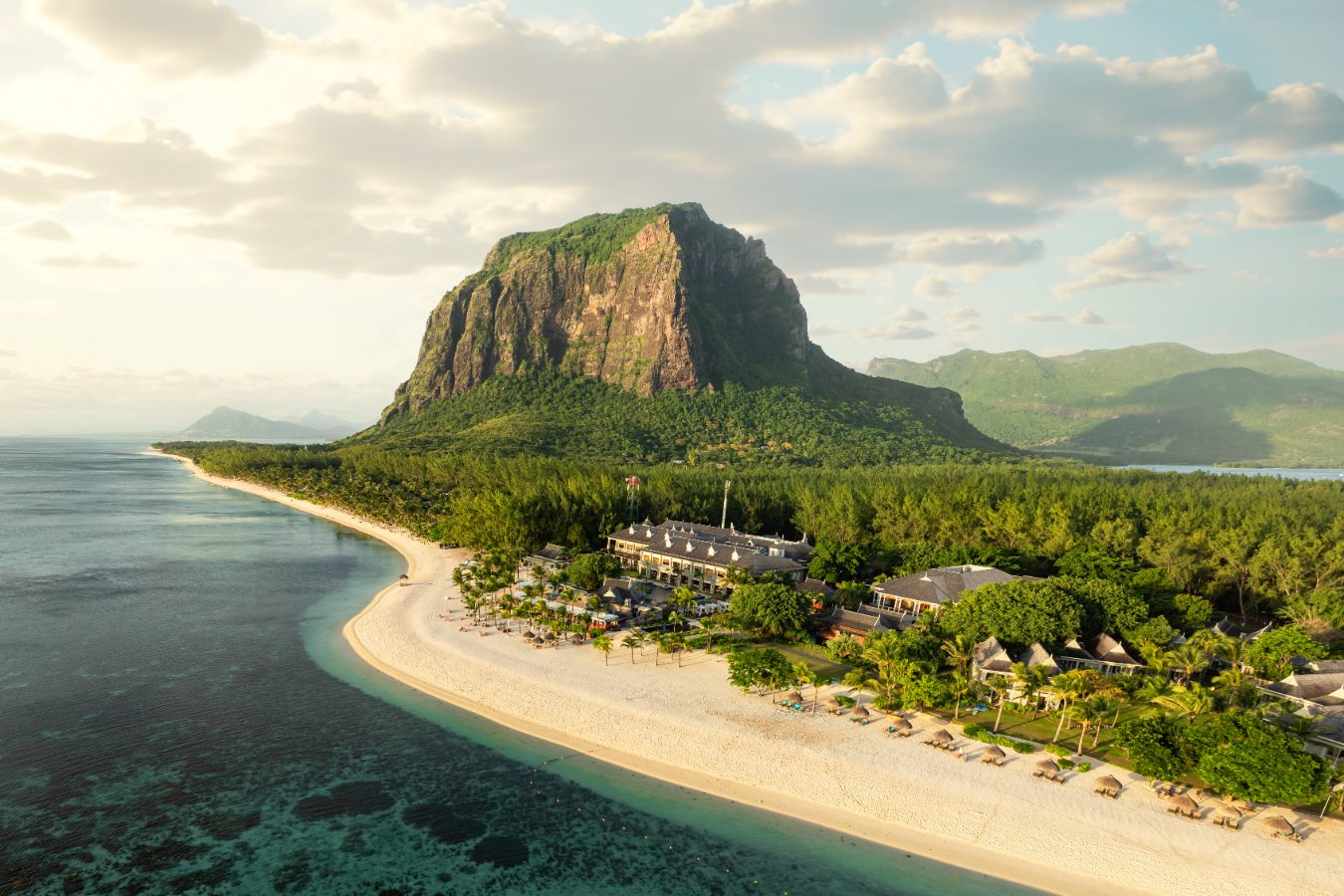
The obvious one is the climb to the top. Allow three to four hours and expect views over the whole system you have been riding — the reef running for miles, the lagoon shifting colour as clouds pass, and kites reduced to specks that make the scale of the place obvious in a way it never is from the water.
On the water without wind, boats run out to Crystal Rock, one of the most photographed spots on the island. Snorkelling over the reef is worth the morning on its own, and dolphin trips leave early to make use of the calm before the trades fill in. Windsurfing, wingfoiling, paddleboarding and diving are all available on the same stretch of beach.
Inland, the roads through the sugar cane are quiet and lead to viewpoints, beaches and villages with no particular agenda. This corner of Mauritius has stayed noticeably free of the crowded promenades and resort strips found elsewhere, which is much of what drew travelling kitesurfers here two decades ago and much of why they still come.

Eating is a genuine part of the trip rather than an afterthought. Within a few minutes of the beach you can find fresh fish, octopus curry and grilled seafood done properly.
Combining Mauritius with something else
Mauritius is well placed for a second destination, and this is where a specialist operator earns its fee. The combination we arrange most often is the Mauritius plus South Africa Safari luxury tour: Le Morne first, then Big Five game viewing. It works particularly well when only one traveller kites, because it gives the trip a second focus that has nothing to do with the forecast.
- Mauritius + South Africa safari — lagoon days, then the bush
- Luxury South Africa safari + Victoria Falls
- Rodrigues Island + Mauritius — the quiet one and the famous one
- La Réunion + Mauritius — volcanoes and lagoon
- Mauritius three-island tour
Why book Le Morne with Planet Kitesurf Holidays
We have been putting together kitesurf holidays since 2001, across more than 30 countries, and every resort we sell has been ridden by one of our own team. That is the difference between a brochure and a recommendation: we can tell you which villa is a short walk from the water, which resort keeps a non-kiting partner happy for a week, and when La Gaulette is the better call than the beach.
We also sell the whole island rather than a single beach (Le Morne, Bel Ombre, Anse La Raie, Belle Mare, Pointe d’Esny and Rodrigues) so the recommendation can follow the trip rather than the inventory. And we build the multi-country itineraries most operators will not touch, as one booking with one person responsible for it.
Planning a Le Morne trip?
Tell us your dates, your level and whether anyone is travelling with you who does not kite. We will come back with a shortlist of hotels on the right part of the lagoon, the school that fits your level, and a full price including flights and transfers — usually within one working day.
Free, with no obligation and no booking fee. We’re a UK tour operator, trading since 2001. Mon–Fri, 09:00–18:00 UK · 5★ on Google from 190+ reviews · ATOL protected (T7314) and Travel Trust Association members. Call +44 1273 921 001.
Frequently asked questions
When is the kitesurf season in Le Morne?
May to November is the reliable season, with the strongest and most consistent trade winds from June to September. September and October give the best all-round trip. December to April is lighter and better suited to lagoon riding than the reef.
Is Le Morne suitable for beginners?
Yes, and it is one of the better places in the world to learn. The lagoon is shallow, flat and sandy, so you can stand up over most of it, and the main centre sits on the beach with modern school kit. Beginners stay inside the lagoon; the reef breaks are a separate world further out.
What is One Eye?
One Eye is the reef break off the tip of the Le Morne peninsula, named for the gap in the mountain you line up through. It is a powerful left-hander over shallow reef and is for confident wave riders only. Getting there involves crossing deep water outside the lagoon.
How difficult is One Eye?
The wave is more approachable than its reputation suggests. The risk lies in the consequences of a mistake, because it breaks over shallow coral well offshore in cross-offshore wind. Most serious incidents there begin with a dropped kite rather than a difficult wave. Little Reef and Manawa are the sensible progression.
How windy is Le Morne?
The trade wind typically blows 18–25 knots through the main season, side-shore to side-onshore across the lagoon. Most riders are on 9–12m kites. Mornings are often lighter, with the wind filling in through late morning and easing again through the late afternoon.
Should I bring a surfboard?
If there is any chance of riding the reef, yes. Le Morne is one of the best wave destinations in kitesurfing and it would be a shame to travel this far without the right board.
Do I need a wetsuit?
Rarely more than a shorty. The water sits around 26–29°C in season and many riders wear boardshorts for the entire trip.
Can non-kiters enjoy Le Morne?
This is one of Le Morne’s real strengths. The kite lagoon sits directly in front of several full-service resorts, so a non-kiting partner has a beach, a spa, a pool and restaurants within a few minutes’ walk of where you launch. Windsurfing, wingfoiling, paddleboarding and diving are all available on the same stretch.
Can Mauritius be combined with a safari?
Yes. Our Mauritius plus South Africa Safari luxury tour pairs Le Morne with Big Five game viewing and can be extended to Victoria Falls. It is a popular choice when only one person in the party kitesurfs.
Should I stay on the beach or in La Gaulette?
The beach if you want to walk to the water, want luxury, or are travelling with people who will not be kiting. La Gaulette for better value, a more local week, and the company of other riders.
Why riders keep going back
Other destinations post better wind statistics. Others have bigger waves, or flatter water, or shorter flights. What Le Morne does that almost nowhere else manages is hold all of it together at once — a lagoon that suits a first lesson, a reef that suits a lifetime of them, warm water, a mountain that dominates every photograph you will take, and an unhurried pace on land that has survived two decades of visitors.
That is a harder thing to build a holiday around than a wind statistic, and a much harder thing to forget afterwards.
To talk it through with someone who has been there, explore kitesurf holidays to Le Morne and Mauritius, or call the team on +44 1273 921 001.
We rank Le Morne third in our guide to the best kitesurfing holidays, which also gives the best months for every place we sell.